
Welcome to Leo Dent
ORTHODONTICS
Give health to yourself and your family
We preserve family smiles – an individual approach and a full range of dental services for each member of your family.
SERVICES
Orthodontics
Orthodontics specializes in the diagnosis, prevention and correction of malpositioned teeth and jaws. The main goal of orthodontic treatment is to create a correct bite, improve chewing function, and ensure an aesthetic smile.
Some of the symptoms that may indicate the need to consult an orthodontist are
- Malocclusion: For example, abnormalities such as an overhang or misalignment of the upper and lower jaws may indicate the need for orthodontic intervention.
- Absence or large number of gaps between teeth: This may be due to uneven placement of the teeth and jaws.
- Problems with breathing or swallowing: Malocclusion and misalignment of the teeth can affect breathing and swallowing functions.
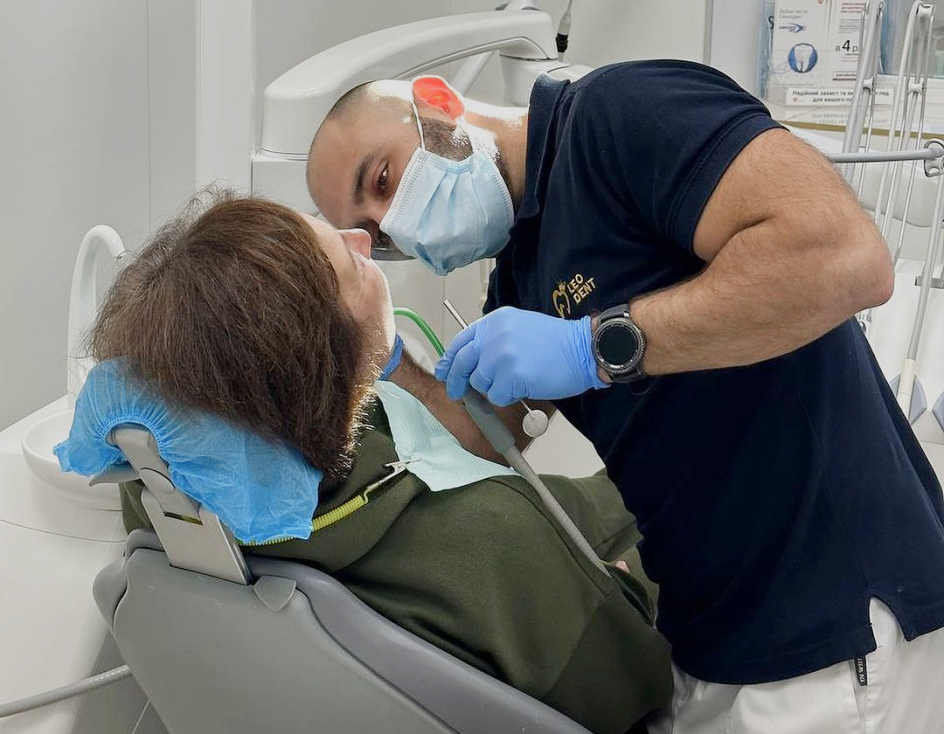
4. Frequent head or neck pain: Bite problems can cause tension in the muscles of the face and head, which can lead to pain.
5. Aesthetics: If you are concerned about the appearance of your smile or are not sure about its aesthetics due to uneven teeth positioning.
Self-adjusting braces are special braces that have built-in clips or clamping mechanisms that allow the wire to set freely, without the need for manual adjustments, as is usually the case with traditional braces. Self-adjusting braces are of different types, including metal, ceramic and plastic, each of which has its own characteristics and advantages in the process of orthodontic treatment. The advantages of self-adjusting braces include patient comfort, fewer visits to the doctor for adjustments, the possibility of shorter treatment time, and less hassle associated with visits to the orthodontist.
The process of installing self-adjusting braces and the duration of treatment:
- Preparation of teeth: As with other types of braces, your teeth are prepared before you get your self aligning braces. This includes brushing your teeth and treating their surfaces.
- Installation of braces: The orthodontist applies a special adhesive to the front surface of each tooth, after which each bracket is fixed in place. If they have a self-adjusting function, this means that they do not require additional ligatures or rubber bands to fix the wire.
- Fixing the wire: Once the braces are in place, the orthodontist inserts the wire into the bracket channels. Self-adjusting braces automatically fix the wire in the appropriate positions without the use of additional ligatures or rubber bands.
- Adjustment and control: After the braces are installed, the patient should visit the orthodontist regularly to check the status of treatment and make any necessary adjustments. These visits may include adjustments to the wires and checking overall progress.
- The duration of treatment with self-adjusting braces may vary depending on the severity of the case, the patient’s age, and other factors. On average, treatment can last from several months to several years. The exact duration of treatment is determined by the orthodontist based on the individual characteristics of each patient.
Ligature braces are used in orthodontics to correct the position of the teeth. They differ from self-adjusting braces in that they include ligatures or rubber bands that secure the wire in the bracket and help correct the bite. The benefits of ligature braces include that they can provide more precise adjustment and control over moving teeth, and allow orthodontists more flexibility in their treatment options. Ligature braces can also be available in a variety of options, including metal, ceramic, and others.
The process of installing ligature braces usually includes the following steps:
- Preparation of the teeth: The orthodontist prepares the surfaces of the teeth for the braces by cleaning and treating them to ensure the best possible bond.
- Installing braces: Each bracket is glued to the front surface of each tooth using a special adhesive. After that, the adhesives can be dried with a special light device for fixation.
- Fixing the wire: Once the braces are in place, the orthodontist inserts the wire into the ligatures (or special clamps) to begin the process of correcting the teeth.
- Adjustment and patient education: The doctor may make several adjustments to ensure the correct treatment dynamics. The patient also receives instructions on how to care for the braces, dietary restrictions, and wearing regimen.
The duration of treatment depends on the patient’s information, such as the severity of the malocclusion, the type of ligature braces, the patient’s age, and other factors. Usually, treatment with ligature braces can last from several months to several years. During periodic visits to the orthodontist, they will adjust the braces and wire to correct the bite and achieve the desired treatment results.
Metal braces are used to correct the position of teeth and bite. They consist of metal components that are attached to the front surface of the teeth with glue. Each bracket has special channels for laying wires that are used to correct the position of the teeth. When wearing metal braces, it is very important to follow the rules of oral hygiene: regular brushing and flossing after meals, as well as using mouthwash. When brushing, you should pay special attention to the areas around the braces where food and bacteria can be deposited. The period of use of metal braces usually depends on the complexity of the treatment and the patient’s response to the therapy. In most cases, the period of wearing metal braces can range from several months to several years, depending on the need for bite correction and other factors.
Ceramic braces are a type of braces made of ceramic or plastic that looks close to the color of the teeth. The process of placing ceramic braces is similar to placing conventional metal braces. The orthodontist applies adhesive to the front surface of each tooth and then fixes a ceramic bracket to each tooth. After that, the wire is inserted into the braces to begin bite correction. Caring for ceramic braces: It is important to thoroughly clean your teeth and braces with a toothbrush and floss. It may also be helpful to use a mouthwash to reduce the risk of tooth decay and gum disease. The period of use of ceramic braces usually depends on the need for bite correction and the patient’s response to treatment. In most cases, the period of use of ceramic braces can vary from several months to several years, usually similar to the period of wearing metal braces.
Ceramic braces are a popular choice among people who want to minimize the visibility of braces during treatment. They are a discrete and aesthetic option that helps patients feel more comfortable during treatment of orthodontic problems.
Sapphire braces are a type of braces that are made of transparent single crystal sapphire. They are one of the most aesthetically pleasing braces because they are transparent, which makes them less visible on the teeth. The process of installing sapphire braces is similar to that of other types of braces. The orthodontist cleans the surface of the teeth, applies glue to each tooth, and fixes the braces to their surfaces. Then the wire is inserted into the braces to correct the bite. Caring for sapphire braces is similar to caring for other types of braces. It is important to brush your teeth thoroughly after each meal, using special brushes and floss. It is also recommended to limit the consumption of foods that can stain braces, such as coffee, tea, or cola. The period of use of sapphire braces usually depends on the severity of the orthodontic case, the patient’s age, and other factors. On average, treatment can last from several months to several years, but this can vary depending on the individual needs of each patient.
Bite correction plates, also known as retainers or orthodontic retention appliances, are special devices used to hold teeth in the proper position after treatment with orthodontic braces or other methods.
There are several types of bite correction plates, including:
- Fixed retainers: These retainers are attached to the back of the teeth and remain in place for a long period of time. They are invisible to others because they are located behind the teeth.
- Curved plates: These appliances consist of clear, durable plates that are placed over the teeth and correct the bite. They are often used to correct mild to moderate cases of misalignment.
The process of installing bite correction plates usually involves taking impressions of the patient’s teeth, which are used to create a customized retainer. These appliances can be made based on tooth models obtained from the patient through impressions or scans.
Aligners are used to correct an uneven bite and straighten teeth. They are an alternative to traditional metal braces and are often used to correct mild to moderate cases of mild to moderate crooked teeth.
There are several types of aligners:
- Clear aligners: These are the most common type of aligners. They are made of clear plastic, which makes them almost invisible when worn.
- Thermoplastic aligners: These aligners are made of a thin plastic that has shape memory. Once heated, they become flexible and can be placed on the teeth, after which they become rigid again and hold the teeth in the correct position.
- Hybrid aligners: These aligners combine the advantages of clear aligners and thermoplastic aligners. They provide more rigidity, but still remain transparent and comfortable to wear.
The process of installing aligners usually involves a visit to the orthodontist to take tooth impressions. Based on these traces, an individually made set of aligners is produced for each patient. The patient then receives their set of aligners and must wear them according to the orthodontist’s recommendations, usually for 20-22 hours a day, removing them only for eating and brushing their teeth. Usually, after a few weeks, the patient changes the aligners to the next set in the sequence prescribed by the doctor.
Trainers are used to correct some orthodontic problems in children and adults. They are commonly used to treat pediatric bite and overbite to correct problems in the development of the jaw and teeth in young patients. Here are some types of trainers:
- Muscle trainers: These appliances are designed to support the proper functioning of the muscles of the face and tongue. They can include exercises for the facial and tongue muscles, which helps to solve bite problems.
- Functional trainers: These appliances are designed to change the movement of the jaw and tongue to improve the bite and jaw function. They can be used to correct a malocclusion, such as a round bite or a back bite.
- Dental trainers: These appliances are used in children to address bite problems and jaw development. They are commonly used to correct deficiencies such as thumb overjet and to develop the correct jaw and tooth shape.
The process of getting a bite correction tray usually involves a consultation with an orthodontist. The doctor will discuss with the patient or his/her parents the purpose of treatment and indications for the use of the tray. Then, tooth impressions will be taken for the individualized manufacture of the tray. After that, the patient will receive the trainer and receive instructions for its use and care. Depending on the type of tray, the time of wearing may vary.
Orthodontics
Prices
-
Brace reinstallation (1 unit)500.00 ₴
-
Retainer correction (1 unit)350.00 ₴
-
Coated arch replacement (1 jaw)500.00 ₴
-
Spacer (place holder 1 pc)2 500.00 ₴
-
Orthodontic mouth guard4 000.00 ₴
-
Retraction of a retained tooth4 000.00 ₴
-
Arch replacement (1 jaw)300.00 ₴
-
Ligature replacement (1 jaw)200.00 ₴
-
Spring replacement200.00 ₴
-
Plate correction200.00 ₴
-
Overlays for crossbite correction460.00 ₴
-
Palatine brace (Marco Rosso apparatus)12 000.00 ₴
-
Occlusal mouth guard1 500.00 ₴
-
Twinkie-block5 000.00 ₴
-
Setting the button500.00 ₴
-
Mini-implant placement4 000.00 ₴
-
Visualization of the eligner2 200.00 ₴
-
Aqualizer (1 jaw)900.00 ₴
-
Self-adjusting metal braces21 000.00 ₴
-
Саморегулюючі керамічні брекети30 000.00 ₴
-
Self-adjusting ceramic braces31 000.00 ₴
-
Ligature metal braces12 000.00 ₴
-
Ligature ceramic braces15 000.00 ₴
-
Ligature sapphire braces17 000.00 ₴
-
Colorful plate4 000.00 ₴
-
Plate with apllication of increased complexity6 950.00 ₴
-
Standard plate (transparent)3 500.00 ₴
-
Non-removable retainer3 500.00 ₴
-
Removable retainer4 000.00 ₴
-
Aligners4 200.00 ₴
-
Trainer5 000.00 ₴
Welcome to Leo Dent
Give health to yourself and your family
We preserve family smiles – an individual approach and a full range of dental services for each member of your family.
SERVICES
Orthodontics
Orthodontics specializes in the diagnosis, prevention and correction of malpositioned teeth and jaws. The main goal of orthodontic treatment is to create a correct bite, improve chewing function, and ensure an aesthetic smile.
Some of the symptoms that may indicate the need to consult an orthodontist are
- Malocclusion: For example, abnormalities such as an overhang or misalignment of the upper and lower jaws may indicate the need for orthodontic intervention.
- Absence or large number of gaps between teeth: This may be due to uneven placement of the teeth and jaws.
- Problems with breathing or swallowing: Malocclusion and misalignment of the teeth can affect breathing and swallowing functions.
- Frequent head or neck pain: Bite problems can cause tension in the muscles of the face and head, which can lead to pain.
- Aesthetics: If you are concerned about the appearance of your smile or are not sure about its aesthetics due to uneven teeth positioning.
Self-adjusting braces are special braces that have built-in clips or clamping mechanisms that allow the wire to set freely, without the need for manual adjustments, as is usually the case with traditional braces. Self-adjusting braces are of different types, including metal, ceramic and plastic, each of which has its own characteristics and advantages in the process of orthodontic treatment. The advantages of self-adjusting braces include patient comfort, fewer visits to the doctor for adjustments, the possibility of shorter treatment time, and less hassle associated with visits to the orthodontist.
The process of installing self-adjusting braces and the duration of treatment:
- Preparation of teeth: As with other types of braces, your teeth are prepared before you get your self aligning braces. This includes brushing your teeth and treating their surfaces.
- Installation of braces: The orthodontist applies a special adhesive to the front surface of each tooth, after which each bracket is fixed in place. If they have a self-adjusting function, this means that they do not require additional ligatures or rubber bands to fix the wire.
- Fixing the wire: Once the braces are in place, the orthodontist inserts the wire into the bracket channels. Self-adjusting braces automatically fix the wire in the appropriate positions without the use of additional ligatures or rubber bands.
- Adjustment and control: After the braces are installed, the patient should visit the orthodontist regularly to check the status of treatment and make any necessary adjustments. These visits may include adjustments to the wires and checking overall progress.
- The duration of treatment with self-adjusting braces may vary depending on the severity of the case, the patient’s age, and other factors. On average, treatment can last from several months to several years. The exact duration of treatment is determined by the orthodontist based on the individual characteristics of each patient.
Ligature braces are used in orthodontics to correct the position of the teeth. They differ from self-adjusting braces in that they include ligatures or rubber bands that secure the wire in the bracket and help correct the bite. The benefits of ligature braces include that they can provide more precise adjustment and control over moving teeth, and allow orthodontists more flexibility in their treatment options. Ligature braces can also be available in a variety of options, including metal, ceramic, and others.
The process of installing ligature braces usually includes the following steps:
- Preparation of the teeth: The orthodontist prepares the surfaces of the teeth for the braces by cleaning and treating them to ensure the best possible bond.
- Installing braces: Each bracket is glued to the front surface of each tooth using a special adhesive. After that, the adhesives can be dried with a special light device for fixation.
- Fixing the wire: Once the braces are in place, the orthodontist inserts the wire into the ligatures (or special clamps) to begin the process of correcting the teeth.
- Adjustment and patient education: The doctor may make several adjustments to ensure the correct treatment dynamics. The patient also receives instructions on how to care for the braces, dietary restrictions, and wearing regimen.
The duration of treatment depends on the patient’s information, such as the severity of the malocclusion, the type of ligature braces, the patient’s age, and other factors. Usually, treatment with ligature braces can last from several months to several years. During periodic visits to the orthodontist, they will adjust the braces and wire to correct the bite and achieve the desired treatment results.
Metal braces are used to correct the position of teeth and bite. They consist of metal components that are attached to the front surface of the teeth with glue. Each bracket has special channels for laying wires that are used to correct the position of the teeth. When wearing metal braces, it is very important to follow the rules of oral hygiene: regular brushing and flossing after meals, as well as using mouthwash. When brushing, you should pay special attention to the areas around the braces where food and bacteria can be deposited. The period of use of metal braces usually depends on the complexity of the treatment and the patient’s response to the therapy. In most cases, the period of wearing metal braces can range from several months to several years, depending on the need for bite correction and other factors.
Ceramic braces are a type of braces made of ceramic or plastic that looks close to the color of the teeth. The process of placing ceramic braces is similar to placing conventional metal braces. The orthodontist applies adhesive to the front surface of each tooth and then fixes a ceramic bracket to each tooth. After that, the wire is inserted into the braces to begin bite correction. Caring for ceramic braces: It is important to thoroughly clean your teeth and braces with a toothbrush and floss. It may also be helpful to use a mouthwash to reduce the risk of tooth decay and gum disease. The period of use of ceramic braces usually depends on the need for bite correction and the patient’s response to treatment. In most cases, the period of use of ceramic braces can vary from several months to several years, usually similar to the period of wearing metal braces.
Ceramic braces are a popular choice among people who want to minimize the visibility of braces during treatment. They are a discrete and aesthetic option that helps patients feel more comfortable during treatment of orthodontic problems.
Sapphire braces are a type of braces that are made of transparent single crystal sapphire. They are one of the most aesthetically pleasing braces because they are transparent, which makes them less visible on the teeth. The process of installing sapphire braces is similar to that of other types of braces. The orthodontist cleans the surface of the teeth, applies glue to each tooth, and fixes the braces to their surfaces. Then the wire is inserted into the braces to correct the bite. Caring for sapphire braces is similar to caring for other types of braces. It is important to brush your teeth thoroughly after each meal, using special brushes and floss. It is also recommended to limit the consumption of foods that can stain braces, such as coffee, tea, or cola. The period of use of sapphire braces usually depends on the severity of the orthodontic case, the patient’s age, and other factors. On average, treatment can last from several months to several years, but this can vary depending on the individual needs of each patient.
Bite correction plates, also known as retainers or orthodontic retention appliances, are special devices used to hold teeth in the proper position after treatment with orthodontic braces or other methods.
There are several types of bite correction plates, including:
- Fixed retainers: These retainers are attached to the back of the teeth and remain in place for a long period of time. They are invisible to others because they are located behind the teeth.
- Curved plates: These appliances consist of clear, durable plates that are placed over the teeth and correct the bite. They are often used to correct mild to moderate cases of misalignment.
The process of installing bite correction plates usually involves taking impressions of the patient’s teeth, which are used to create a customized retainer. These appliances can be made based on tooth models obtained from the patient through impressions or scans.
Aligners are used to correct an uneven bite and straighten teeth. They are an alternative to traditional metal braces and are often used to correct mild to moderate cases of mild to moderate crooked teeth.
There are several types of aligners:
- Clear aligners: These are the most common type of aligners. They are made of clear plastic, which makes them almost invisible when worn.
- Thermoplastic aligners: These aligners are made of a thin plastic that has shape memory. Once heated, they become flexible and can be placed on the teeth, after which they become rigid again and hold the teeth in the correct position.
- Hybrid aligners: These aligners combine the advantages of clear aligners and thermoplastic aligners. They provide more rigidity, but still remain transparent and comfortable to wear.
The process of installing aligners usually involves a visit to the orthodontist to take tooth impressions. Based on these traces, an individually made set of aligners is produced for each patient. The patient then receives their set of aligners and must wear them according to the orthodontist’s recommendations, usually for 20-22 hours a day, removing them only for eating and brushing their teeth. Usually, after a few weeks, the patient changes the aligners to the next set in the sequence prescribed by the doctor.
Trainers are used to correct some orthodontic problems in children and adults. They are commonly used to treat pediatric bite and overbite to correct problems in the development of the jaw and teeth in young patients. Here are some types of trainers:
- Muscle trainers: These appliances are designed to support the proper functioning of the muscles of the face and tongue. They can include exercises for the facial and tongue muscles, which helps to solve bite problems.
- Functional trainers: These appliances are designed to change the movement of the jaw and tongue to improve the bite and jaw function. They can be used to correct a malocclusion, such as a round bite or a back bite.
- Dental trainers: These appliances are used in children to address bite problems and jaw development. They are commonly used to correct deficiencies such as thumb overjet and to develop the correct jaw and tooth shape.
The process of getting a bite correction tray usually involves a consultation with an orthodontist. The doctor will discuss with the patient or his/her parents the purpose of treatment and indications for the use of the tray. Then, tooth impressions will be taken for the individualized manufacture of the tray. After that, the patient will receive the trainer and receive instructions for its use and care. Depending on the type of tray, the time of wearing may vary.
Orthodontics
Prices
-
Brace reinstallation (1 unit)500.00 ₴
-
Retainer correction (1 unit)350.00 ₴
-
Coated arch replacement (1 jaw)500.00 ₴
-
Spacer (place holder 1 pc)2 500.00 ₴
-
Orthodontic mouth guard4 000.00 ₴
-
Retraction of a retained tooth4 000.00 ₴
-
Arch replacement (1 jaw)300.00 ₴
-
Ligature replacement (1 jaw)200.00 ₴
-
Spring replacement200.00 ₴
-
Plate correction200.00 ₴
-
Overlays for crossbite correction460.00 ₴
-
Palatine brace (Marco Rosso apparatus)12 000.00 ₴
-
Occlusal mouth guard1 500.00 ₴
-
Twinkie-block5 000.00 ₴
-
Setting the button500.00 ₴
-
Mini-implant placement4 000.00 ₴
-
Visualization of the eligner2 200.00 ₴
-
Aqualizer (1 jaw)900.00 ₴
-
Self-adjusting metal braces21 000.00 ₴
-
Саморегулюючі керамічні брекети30 000.00 ₴
-
Self-adjusting ceramic braces31 000.00 ₴
-
Ligature metal braces12 000.00 ₴
-
Ligature ceramic braces15 000.00 ₴
-
Ligature sapphire braces17 000.00 ₴
-
Colorful plate4 000.00 ₴
-
Plate with apllication of increased complexity6 950.00 ₴
-
Standard plate (transparent)3 500.00 ₴
-
Non-removable retainer3 500.00 ₴
-
Removable retainer4 000.00 ₴
-
Aligners4 200.00 ₴
-
Trainer5 000.00 ₴
Welcome to Leo Dent
Give health to yourself and your family
We preserve family smiles – an individual approach and a full range of dental services for each member of your family.
SERVICES
Orthodontics
Orthodontics specializes in the diagnosis, prevention and correction of malpositioned teeth and jaws. The main goal of orthodontic treatment is to create a correct bite, improve chewing function, and ensure an aesthetic smile.
Some of the symptoms that may indicate the need to consult an orthodontist are
- Malocclusion: For example, abnormalities such as an overhang or misalignment of the upper and lower jaws may indicate the need for orthodontic intervention.
- Absence or large number of gaps between teeth: This may be due to uneven placement of the teeth and jaws.
- Problems with breathing or swallowing: Malocclusion and misalignment of the teeth can affect breathing and swallowing functions.
- Frequent head or neck pain: Bite problems can cause tension in the muscles of the face and head, which can lead to pain.
- Aesthetics: If you are concerned about the appearance of your smile or are not sure about its aesthetics due to uneven teeth positioning.
Self-adjusting braces are special braces that have built-in clips or clamping mechanisms that allow the wire to set freely, without the need for manual adjustments, as is usually the case with traditional braces. Self-adjusting braces are of different types, including metal, ceramic and plastic, each of which has its own characteristics and advantages in the process of orthodontic treatment. The advantages of self-adjusting braces include patient comfort, fewer visits to the doctor for adjustments, the possibility of shorter treatment time, and less hassle associated with visits to the orthodontist.
The process of installing self-adjusting braces and the duration of treatment:
- Preparation of teeth: As with other types of braces, your teeth are prepared before you get your self aligning braces. This includes brushing your teeth and treating their surfaces.
- Installation of braces: The orthodontist applies a special adhesive to the front surface of each tooth, after which each bracket is fixed in place. If they have a self-adjusting function, this means that they do not require additional ligatures or rubber bands to fix the wire.
- Fixing the wire: Once the braces are in place, the orthodontist inserts the wire into the bracket channels. Self-adjusting braces automatically fix the wire in the appropriate positions without the use of additional ligatures or rubber bands.
- Adjustment and control: After the braces are installed, the patient should visit the orthodontist regularly to check the status of treatment and make any necessary adjustments. These visits may include adjustments to the wires and checking overall progress.
- The duration of treatment with self-adjusting braces may vary depending on the severity of the case, the patient’s age, and other factors. On average, treatment can last from several months to several years. The exact duration of treatment is determined by the orthodontist based on the individual characteristics of each patient.
Ligature braces are used in orthodontics to correct the position of the teeth. They differ from self-adjusting braces in that they include ligatures or rubber bands that secure the wire in the bracket and help correct the bite. The benefits of ligature braces include that they can provide more precise adjustment and control over moving teeth, and allow orthodontists more flexibility in their treatment options. Ligature braces can also be available in a variety of options, including metal, ceramic, and others.
The process of installing ligature braces usually includes the following steps:
- Preparation of the teeth: The orthodontist prepares the surfaces of the teeth for the braces by cleaning and treating them to ensure the best possible bond.
- Installing braces: Each bracket is glued to the front surface of each tooth using a special adhesive. After that, the adhesives can be dried with a special light device for fixation.
- Fixing the wire: Once the braces are in place, the orthodontist inserts the wire into the ligatures (or special clamps) to begin the process of correcting the teeth.
- Adjustment and patient education: The doctor may make several adjustments to ensure the correct treatment dynamics. The patient also receives instructions on how to care for the braces, dietary restrictions, and wearing regimen.
The duration of treatment depends on the patient’s information, such as the severity of the malocclusion, the type of ligature braces, the patient’s age, and other factors. Usually, treatment with ligature braces can last from several months to several years. During periodic visits to the orthodontist, they will adjust the braces and wire to correct the bite and achieve the desired treatment results.
Metal braces are used to correct the position of teeth and bite. They consist of metal components that are attached to the front surface of the teeth with glue. Each bracket has special channels for laying wires that are used to correct the position of the teeth. When wearing metal braces, it is very important to follow the rules of oral hygiene: regular brushing and flossing after meals, as well as using mouthwash. When brushing, you should pay special attention to the areas around the braces where food and bacteria can be deposited. The period of use of metal braces usually depends on the complexity of the treatment and the patient’s response to the therapy. In most cases, the period of wearing metal braces can range from several months to several years, depending on the need for bite correction and other factors.
Ceramic braces are a type of braces made of ceramic or plastic that looks close to the color of the teeth. The process of placing ceramic braces is similar to placing conventional metal braces. The orthodontist applies adhesive to the front surface of each tooth and then fixes a ceramic bracket to each tooth. After that, the wire is inserted into the braces to begin bite correction. Caring for ceramic braces: It is important to thoroughly clean your teeth and braces with a toothbrush and floss. It may also be helpful to use a mouthwash to reduce the risk of tooth decay and gum disease. The period of use of ceramic braces usually depends on the need for bite correction and the patient’s response to treatment. In most cases, the period of use of ceramic braces can vary from several months to several years, usually similar to the period of wearing metal braces.
Ceramic braces are a popular choice among people who want to minimize the visibility of braces during treatment. They are a discrete and aesthetic option that helps patients feel more comfortable during treatment of orthodontic problems.
Sapphire braces are a type of braces that are made of transparent single crystal sapphire. They are one of the most aesthetically pleasing braces because they are transparent, which makes them less visible on the teeth. The process of installing sapphire braces is similar to that of other types of braces. The orthodontist cleans the surface of the teeth, applies glue to each tooth, and fixes the braces to their surfaces. Then the wire is inserted into the braces to correct the bite. Caring for sapphire braces is similar to caring for other types of braces. It is important to brush your teeth thoroughly after each meal, using special brushes and floss. It is also recommended to limit the consumption of foods that can stain braces, such as coffee, tea, or cola. The period of use of sapphire braces usually depends on the severity of the orthodontic case, the patient’s age, and other factors. On average, treatment can last from several months to several years, but this can vary depending on the individual needs of each patient.
Bite correction plates, also known as retainers or orthodontic retention appliances, are special devices used to hold teeth in the proper position after treatment with orthodontic braces or other methods.
There are several types of bite correction plates, including:
- Fixed retainers: These retainers are attached to the back of the teeth and remain in place for a long period of time. They are invisible to others because they are located behind the teeth.
- Curved plates: These appliances consist of clear, durable plates that are placed over the teeth and correct the bite. They are often used to correct mild to moderate cases of misalignment.
The process of installing bite correction plates usually involves taking impressions of the patient’s teeth, which are used to create a customized retainer. These appliances can be made based on tooth models obtained from the patient through impressions or scans.
Aligners are used to correct an uneven bite and straighten teeth. They are an alternative to traditional metal braces and are often used to correct mild to moderate cases of mild to moderate crooked teeth.
There are several types of aligners:
- Clear aligners: These are the most common type of aligners. They are made of clear plastic, which makes them almost invisible when worn.
- Thermoplastic aligners: These aligners are made of a thin plastic that has shape memory. Once heated, they become flexible and can be placed on the teeth, after which they become rigid again and hold the teeth in the correct position.
- Hybrid aligners: These aligners combine the advantages of clear aligners and thermoplastic aligners. They provide more rigidity, but still remain transparent and comfortable to wear.
The process of installing aligners usually involves a visit to the orthodontist to take tooth impressions. Based on these traces, an individually made set of aligners is produced for each patient. The patient then receives their set of aligners and must wear them according to the orthodontist’s recommendations, usually for 20-22 hours a day, removing them only for eating and brushing their teeth. Usually, after a few weeks, the patient changes the aligners to the next set in the sequence prescribed by the doctor.
Trainers are used to correct some orthodontic problems in children and adults. They are commonly used to treat pediatric bite and overbite to correct problems in the development of the jaw and teeth in young patients. Here are some types of trainers:
- Muscle trainers: These appliances are designed to support the proper functioning of the muscles of the face and tongue. They can include exercises for the facial and tongue muscles, which helps to solve bite problems.
- Functional trainers: These appliances are designed to change the movement of the jaw and tongue to improve the bite and jaw function. They can be used to correct a malocclusion, such as a round bite or a back bite.
- Dental trainers: These appliances are used in children to address bite problems and jaw development. They are commonly used to correct deficiencies such as thumb overjet and to develop the correct jaw and tooth shape.
The process of getting a bite correction tray usually involves a consultation with an orthodontist. The doctor will discuss with the patient or his/her parents the purpose of treatment and indications for the use of the tray. Then, tooth impressions will be taken for the individualized manufacture of the tray. After that, the patient will receive the trainer and receive instructions for its use and care. Depending on the type of tray, the time of wearing may vary.
Orthodontics
Prices
-
Brace reinstallation (1 unit)500.00 ₴
-
Retainer correction (1 unit)350.00 ₴
-
Coated arch replacement (1 jaw)500.00 ₴
-
Spacer (place holder 1 pc)2 500.00 ₴
-
Orthodontic mouth guard4 000.00 ₴
-
Retraction of a retained tooth4 000.00 ₴
-
Arch replacement (1 jaw)300.00 ₴
-
Ligature replacement (1 jaw)200.00 ₴
-
Spring replacement200.00 ₴
-
Plate correction200.00 ₴
-
Overlays for crossbite correction460.00 ₴
-
Palatine brace (Marco Rosso apparatus)12 000.00 ₴
-
Occlusal mouth guard1 500.00 ₴
-
Twinkie-block5 000.00 ₴
-
Setting the button500.00 ₴
-
Mini-implant placement4 000.00 ₴
-
Visualization of the eligner2 200.00 ₴
-
Aqualizer (1 jaw)900.00 ₴
-
Self-adjusting metal braces21 000.00 ₴
-
Саморегулюючі керамічні брекети30 000.00 ₴
-
Self-adjusting ceramic braces31 000.00 ₴
-
Ligature metal braces12 000.00 ₴
-
Ligature ceramic braces15 000.00 ₴
-
Ligature sapphire braces17 000.00 ₴
-
Colorful plate4 000.00 ₴
-
Plate with apllication of increased complexity6 950.00 ₴
-
Standard plate (transparent)3 500.00 ₴
-
Non-removable retainer3 500.00 ₴
-
Removable retainer4 000.00 ₴
-
Aligners4 200.00 ₴
-
Trainer5 000.00 ₴