
Welcome to Leo Dent
PERIODONTOLOGY
Give health to yourself and your family
We preserve family smiles – an individual approach and a full range of dental services for each member of your family.
SERVICES
Periodontology
Periodontics is a branch of dentistry that specializes in the diagnosis, treatment and prevention of periodontal diseases, i.e. the tissues that surround and support the teeth (gums, jawbone, cement, periodontal ligaments).
Here are some symptoms that may indicate the need to consult a periodontist:
- Bleeding gums: If you notice blood while brushing your teeth or eating, it may be a sign of gum disease.
- Receding gums: If the gums start to recede from the teeth, there may be a visible enlargement of the tooth roots and a risk of periodontitis.
- Increased tooth sensitivity: Periodontal problems can affect tooth sensitivity, particularly to cold and heat.
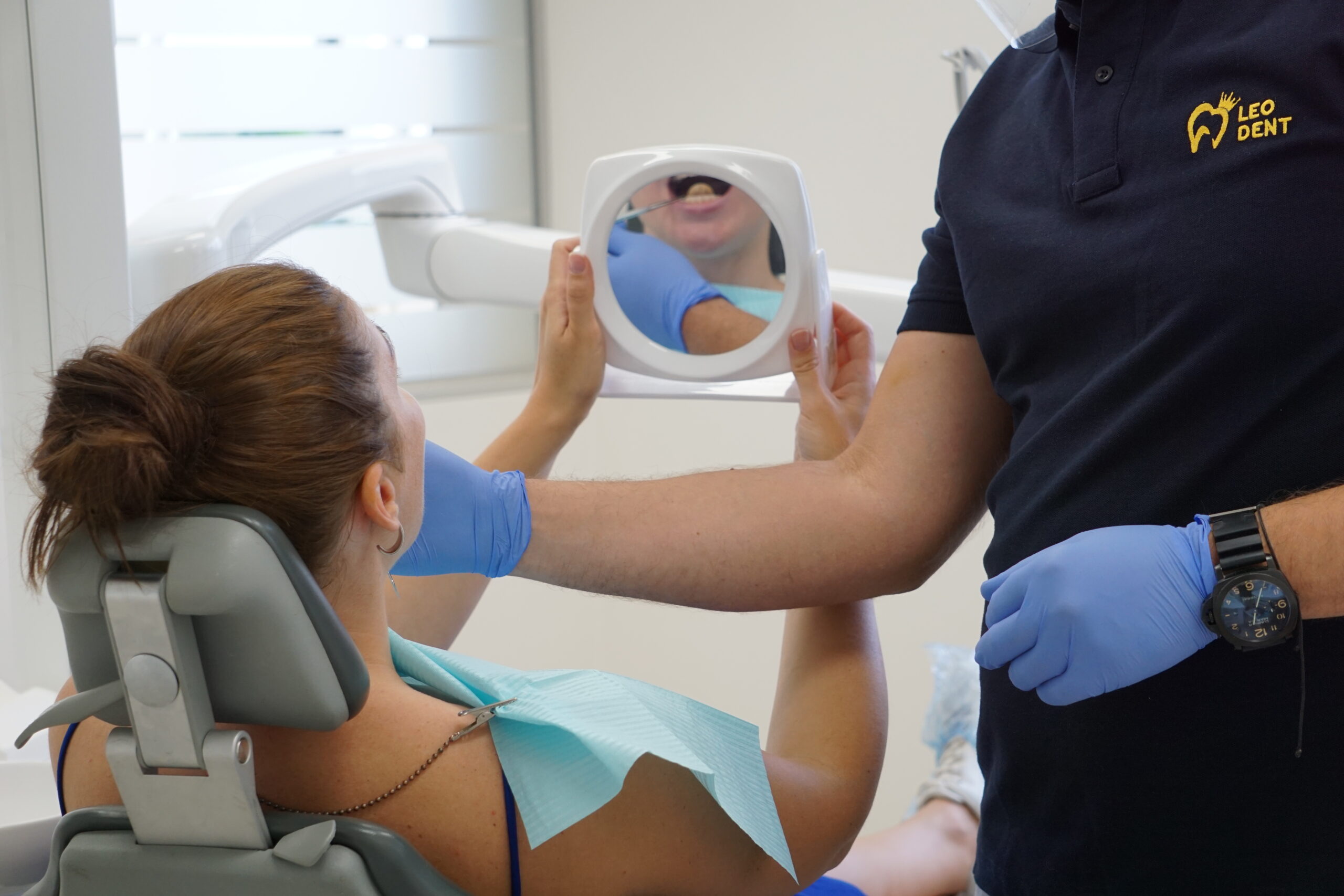
4. Irritation or pain while eating or brushing your teeth: Periodontal inflammation can lead to discomfort or pain.
5. Changes in the structure of the gums and jaw: Thickening, deepening of periodontal pockets, or the appearance of tartar can be an indicator of periodontal problems.
6. Bad breath: This can be a sign of bacteria and infection in the periodontal tissues.
Diagnosis of periodontitis usually involves a number of clinical and instrumental procedures to determine the condition of periodontal tissues and assess the level of inflammation and damage. Here are some of the most common methods for diagnosing periodontitis:
- Examination and history: The doctor visually examines the gums and teeth and asks questions about the patient’s symptoms.
- Measurement of periodontal pockets: A special instrument, a periodontal probe, is used to measure the depth of the periodontal pockets. The depth of the pockets can be a sign of periodontitis.
- X-ray examination: X-ray images help to detect the condition of the jawbone and root canals of the teeth, as well as to assess the extent of damage.
- Ultrasound diagnostics: Ultrasound devices allow you to assess the condition of periodontal tissues and detect pathological changes.
- Blood tests: Some laboratory tests can be performed to determine the level of inflammatory markers in the blood, which may indicate the presence of periodontitis.
Diabetes can complicate the treatment of periodontitis for several reasons:
- Impaired wound healing: Patients with diabetes may have impaired wound healing due to impaired sugar metabolism. This can complicate the healing process after gum surgery.
- Reduced immune response: Diabetes can lead to a decreased immune response, making the patient more susceptible to infection and inflammation.
- Worsening of the disease: Diabetes can worsen periodontitis and contribute to its progression, as hyperglycemia creates a favorable environment for bacteria to grow in periodontal pockets.
- Impaired carbohydrate control: Treating periodontitis may require a change in diet, but patients with diabetes may have difficulty controlling their blood sugar levels while changing their diet.
Prevention of periodontitis in diabetes mellitus includes regular visits to the dentist for professional oral hygiene and examination of the gums and teeth. It is important to maintain good oral hygiene, brushing and flossing daily. Controlling blood sugar levels is also a key aspect of preventing periodontitis in patients with diabetes, as stable glucose levels help reduce inflammation and worsen the conditions for bacterial growth in the oral cavity. Your doctor may recommend a special diet to help maintain optimal blood sugar levels and reduce the risk of periodontitis. It is also important to avoid smoking, as it can worsen the condition of the gums and exacerbate periodontitis.
Periodontitis is an inflammation of the periodontal tissues that surround and support the teeth. This includes the gums, tooth cement, periodontal ligaments, and jawbone. Periodontitis can occur as a result of an uncontrolled bacterial infection that starts with inflammation of the gums (gingivitis) and spreads deeper.
The process of treating periodontitis may include the following steps:
- Hygienic prevention: The patient is advised to pay special attention to oral hygiene, including thorough brushing and flossing and other means of cleaning the interdental spaces.
- Professional teeth cleaning: A periodontist or hygienist performs professional cleaning of teeth and gums to remove plaque and tartar that can contribute to the development of periodontitis.
- Root canal treatment (endodontic treatment): If periodontitis is accompanied by inflammation of the root canals of the teeth, root canal treatment may be necessary to remove the infection.
- Treatment of gums and jaw bone: In severe periodontitis, surgery may be necessary to remove damaged tissue and restore healthy gums and jawbone.
- Antibiotics: In severe cases, antibiotics may be prescribed to fight the infection.
Treatment of periodontitis can be long-term and requires cooperation between the patient and the dentist. It is important to follow the dentist’s recommendations regarding oral hygiene and regular visits for preventive examinations.
Curettage is a dental procedure used to treat periodontal disease and maintain healthy gums and periodontal tissues. During curettage, the dentist removes plaque, tartar, pigmentation spots, as well as necrotic and inflamed tissue from the gums and periodontal pockets.
The procedure is performed with special instruments – curettes, which allow you to thoroughly clean the surfaces of the teeth, root canals and cavities between the teeth from bacterial plaque and contaminants. Curettage helps to improve the condition of periodontal tissues, reduce inflammation, remove bacteria and prevent further progression of periodontal diseases.
This procedure can be part of the complex treatment of periodontitis or used to prevent periodontal diseases in patients with poor oral hygiene or an increased risk of developing periodontal problems. Curettage is recommended to be performed regularly under the supervision of a dentist to maintain healthy gums and periodontal tissues.
Periodontology
Prices
-
Cupral therapeutic dressing (1 unit)100.00 ₴
-
Clean Pro therapeutic dressing (1 unit)300.00 ₴
-
Curettage300.00 ₴
-
Depopharesis (1 unit)200.00 ₴
-
Medical treatment300.00 ₴
Welcome to Leo Dent
Give health to yourself and your family
We preserve family smiles – an individual approach and a full range of dental services for each member of your family.
SERVICES
Periodontology
Periodontics is a branch of dentistry that specializes in the diagnosis, treatment and prevention of periodontal diseases, i.e. the tissues that surround and support the teeth (gums, jawbone, cement, periodontal ligaments).
Here are some symptoms that may indicate the need to consult a periodontist:
- Bleeding gums: If you notice blood while brushing your teeth or eating, it may be a sign of gum disease.
- Receding gums: If the gums start to recede from the teeth, there may be a visible enlargement of the tooth roots and a risk of periodontitis.
- Increased tooth sensitivity: Periodontal problems can affect tooth sensitivity, particularly to cold and heat.
- Irritation or pain when eating or brushing your teeth: Periodontal inflammation can lead to discomfort or pain.
- Changes in the structure of the gums and jaw: Thickening, deepening of periodontal pockets, or tartar can be an indicator of periodontal problems.
- Bad breath: This can be a sign of bacteria and infection in the periodontal tissues.
Diagnosis of periodontitis usually involves a number of clinical and instrumental procedures to determine the condition of periodontal tissues and assess the level of inflammation and damage. Here are some of the most common methods for diagnosing periodontitis:
- Examination and history: The doctor visually examines the gums and teeth and asks questions about the patient’s symptoms.
- Measurement of periodontal pockets: A special instrument, a periodontal probe, is used to measure the depth of the periodontal pockets. The depth of the pockets can be a sign of periodontitis.
- X-ray examination: X-ray images help to detect the condition of the jawbone and root canals of the teeth, as well as to assess the extent of damage.
- Ultrasound diagnostics: Ultrasound devices allow you to assess the condition of periodontal tissues and detect pathological changes.
- Blood tests: Some laboratory tests can be performed to determine the level of inflammatory markers in the blood, which may indicate the presence of periodontitis.
Diabetes can complicate the treatment of periodontitis for several reasons:
- Impaired wound healing: Patients with diabetes may have impaired wound healing due to impaired sugar metabolism. This can complicate the healing process after gum surgery.
- Reduced immune response: Diabetes can lead to a decreased immune response, making the patient more susceptible to infection and inflammation.
- Worsening of the disease: Diabetes can worsen periodontitis and contribute to its progression, as hyperglycemia creates a favorable environment for bacteria to grow in periodontal pockets.
- Impaired carbohydrate control: Treating periodontitis may require a change in diet, but patients with diabetes may have difficulty controlling their blood sugar levels while changing their diet.
Prevention of periodontitis in diabetes mellitus includes regular visits to the dentist for professional oral hygiene and examination of the gums and teeth. It is important to maintain good oral hygiene, brushing and flossing daily. Controlling blood sugar levels is also a key aspect of preventing periodontitis in patients with diabetes, as stable glucose levels help reduce inflammation and worsen the conditions for bacterial growth in the oral cavity. Your doctor may recommend a special diet to help maintain optimal blood sugar levels and reduce the risk of periodontitis. It is also important to avoid smoking, as it can worsen the condition of the gums and exacerbate periodontitis.
Periodontitis is an inflammation of the periodontal tissues that surround and support the teeth. This includes the gums, tooth cement, periodontal ligaments, and jawbone. Periodontitis can occur as a result of an uncontrolled bacterial infection that starts with inflammation of the gums (gingivitis) and spreads deeper.
The process of treating periodontitis may include the following steps:
- Hygienic prevention: The patient is advised to pay special attention to oral hygiene, including thorough brushing and flossing and other means of cleaning the interdental spaces.
- Professional teeth cleaning: A periodontist or hygienist performs professional cleaning of teeth and gums to remove plaque and tartar that can contribute to the development of periodontitis.
- Root canal treatment (endodontic treatment): If periodontitis is accompanied by inflammation of the root canals of the teeth, root canal treatment may be necessary to remove the infection.
- Treatment of gums and jaw bone: In severe periodontitis, surgery may be necessary to remove damaged tissue and restore healthy gums and jawbone.
- Antibiotics: In severe cases, antibiotics may be prescribed to fight the infection.
Treatment of periodontitis can be long-term and requires cooperation between the patient and the dentist. It is important to follow the dentist’s recommendations regarding oral hygiene and regular visits for preventive examinations.
Curettage is a dental procedure used to treat periodontal disease and maintain healthy gums and periodontal tissues. During curettage, the dentist removes plaque, tartar, pigmentation spots, as well as necrotic and inflamed tissue from the gums and periodontal pockets.
The procedure is performed with special instruments – curettes, which allow you to thoroughly clean the surfaces of the teeth, root canals and cavities between the teeth from bacterial plaque and contaminants. Curettage helps to improve the condition of periodontal tissues, reduce inflammation, remove bacteria and prevent further progression of periodontal diseases.
This procedure can be part of the complex treatment of periodontitis or used to prevent periodontal diseases in patients with poor oral hygiene or an increased risk of developing periodontal problems. Curettage is recommended to be performed regularly under the supervision of a dentist to maintain healthy gums and periodontal tissues.
Periodontology
Prices
-
Cupral therapeutic dressing (1 unit)100.00 ₴
-
Clean Pro therapeutic dressing (1 unit)300.00 ₴
-
Curettage300.00 ₴
-
Depopharesis (1 unit)200.00 ₴
-
Medical treatment300.00 ₴
Welcome to Leo Dent
Give health to yourself and your family
We preserve family smiles – an individual approach and a full range of dental services for each member of your family.
SERVICES
Periodontology
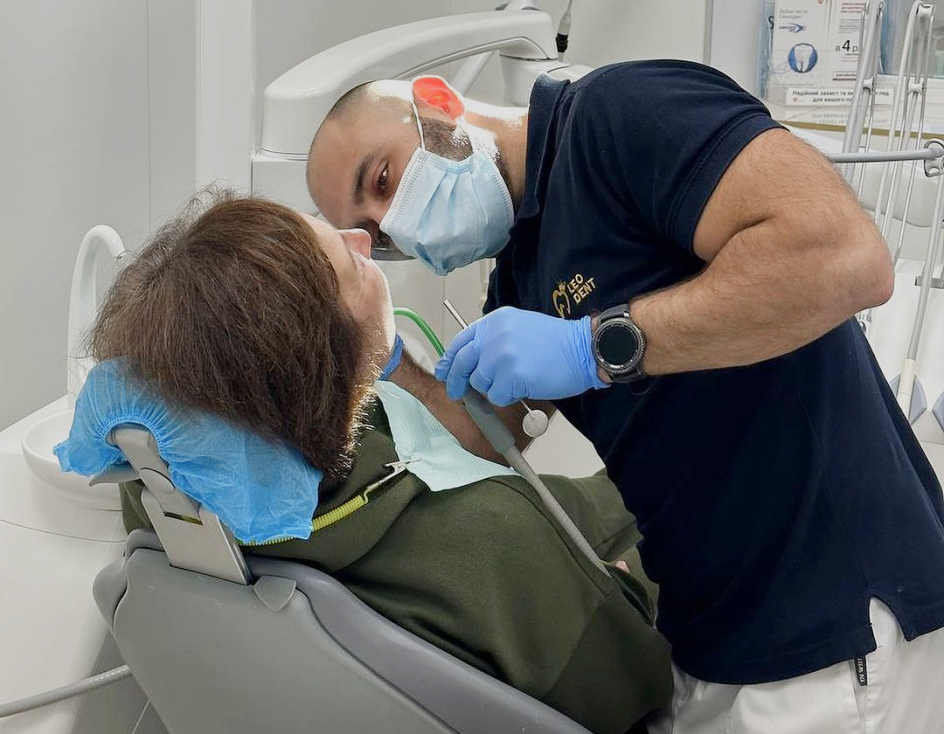
Periodontics is a branch of dentistry that specializes in the diagnosis, treatment and prevention of periodontal diseases, i.e. the tissues that surround and support the teeth (gums, jawbone, cement, periodontal ligaments).
Here are some symptoms that may indicate the need to consult a periodontist:
- Bleeding gums: If you notice blood while brushing your teeth or eating, it may be a sign of gum disease.
- Receding gums: If the gums start to recede from the teeth, there may be a visible enlargement of the tooth roots and a risk of periodontitis.
- Increased tooth sensitivity: Periodontal problems can affect tooth sensitivity, particularly to cold and heat.
- Irritation or pain when eating or brushing your teeth: Periodontal inflammation can lead to discomfort or pain.
- Changes in the structure of the gums and jaw: Thickening, deepening of periodontal pockets, or tartar can be an indicator of periodontal problems.
- Bad breath: This can be a sign of bacteria and infection in the periodontal tissues.
Diagnosis of periodontitis usually involves a number of clinical and instrumental procedures to determine the condition of periodontal tissues and assess the level of inflammation and damage. Here are some of the most common methods for diagnosing periodontitis:
- Examination and history: The doctor visually examines the gums and teeth and asks questions about the patient’s symptoms.
- Measurement of periodontal pockets: A special instrument, a periodontal probe, is used to measure the depth of the periodontal pockets. The depth of the pockets can be a sign of periodontitis.
- X-ray examination: X-ray images help to detect the condition of the jawbone and root canals of the teeth, as well as to assess the extent of damage.
- Ultrasound diagnostics: Ultrasound devices allow you to assess the condition of periodontal tissues and detect pathological changes.
- Blood tests: Some laboratory tests can be performed to determine the level of inflammatory markers in the blood, which may indicate the presence of periodontitis.
Diabetes can complicate the treatment of periodontitis for several reasons:
- Impaired wound healing: Patients with diabetes may have impaired wound healing due to impaired sugar metabolism. This can complicate the healing process after gum surgery.
- Reduced immune response: Diabetes can lead to a decreased immune response, making the patient more susceptible to infection and inflammation.
- Worsening of the disease: Diabetes can worsen periodontitis and contribute to its progression, as hyperglycemia creates a favorable environment for bacteria to grow in periodontal pockets.
- Impaired carbohydrate control: Treating periodontitis may require a change in diet, but patients with diabetes may have difficulty controlling their blood sugar levels while changing their diet.
Prevention of periodontitis in diabetes mellitus includes regular visits to the dentist for professional oral hygiene and examination of the gums and teeth. It is important to maintain good oral hygiene, brushing and flossing daily. Controlling blood sugar levels is also a key aspect of preventing periodontitis in patients with diabetes, as stable glucose levels help reduce inflammation and worsen the conditions for bacterial growth in the oral cavity. Your doctor may recommend a special diet to help maintain optimal blood sugar levels and reduce the risk of periodontitis. It is also important to avoid smoking, as it can worsen the condition of the gums and exacerbate periodontitis.
Periodontitis is an inflammation of the periodontal tissues that surround and support the teeth. This includes the gums, tooth cement, periodontal ligaments, and jawbone. Periodontitis can occur as a result of an uncontrolled bacterial infection that starts with inflammation of the gums (gingivitis) and spreads deeper.
The process of treating periodontitis may include the following steps:
- Hygienic prevention: The patient is advised to pay special attention to oral hygiene, including thorough brushing and flossing and other means of cleaning the interdental spaces.
- Professional teeth cleaning: A periodontist or hygienist performs professional cleaning of teeth and gums to remove plaque and tartar that can contribute to the development of periodontitis.
- Root canal treatment (endodontic treatment): If periodontitis is accompanied by inflammation of the root canals of the teeth, root canal treatment may be necessary to remove the infection.
- Treatment of gums and jaw bone: In severe periodontitis, surgery may be necessary to remove damaged tissue and restore healthy gums and jawbone.
- Antibiotics: In severe cases, antibiotics may be prescribed to fight the infection.
Treatment of periodontitis can be long-term and requires cooperation between the patient and the dentist. It is important to follow the dentist’s recommendations regarding oral hygiene and regular visits for preventive examinations.
Curettage is a dental procedure used to treat periodontal disease and maintain healthy gums and periodontal tissues. During curettage, the dentist removes plaque, tartar, pigmentation spots, as well as necrotic and inflamed tissue from the gums and periodontal pockets.
The procedure is performed with special instruments – curettes, which allow you to thoroughly clean the surfaces of the teeth, root canals and cavities between the teeth from bacterial plaque and contaminants. Curettage helps to improve the condition of periodontal tissues, reduce inflammation, remove bacteria and prevent further progression of periodontal diseases.
This procedure can be part of the complex treatment of periodontitis or used to prevent periodontal diseases in patients with poor oral hygiene or an increased risk of developing periodontal problems. Curettage is recommended to be performed regularly under the supervision of a dentist to maintain healthy gums and periodontal tissues.
Periodontology
Prices
-
Cupral therapeutic dressing (1 unit)100.00 ₴
-
Clean Pro therapeutic dressing (1 unit)300.00 ₴
-
Curettage300.00 ₴
-
Depopharesis (1 unit)200.00 ₴
-
Medical treatment300.00 ₴