
Welcome to Leo Dent
SURGICAL DENTISTRY
Give health to yourself and your family
We preserve family smiles – an individual approach and a full range of dental services for each member of your family.
SERVICES
Surgical dentistry
Oral surgery covers a range of procedures performed by dentists to address various oral health issues, including diagnosis, surgical treatment, and rehabilitation of conditions affecting the teeth, gums, and jaw.
Symptoms that may indicate the need to see a dental surgeon include:
- Severe or persistent toothache;
- Gum disease with symptoms such as swelling, bleeding, or persistent bad breath;
Injury to the teeth or jaw; - Wisdom teeth that have erupted, causing pain or infection;
- Malocclusion.
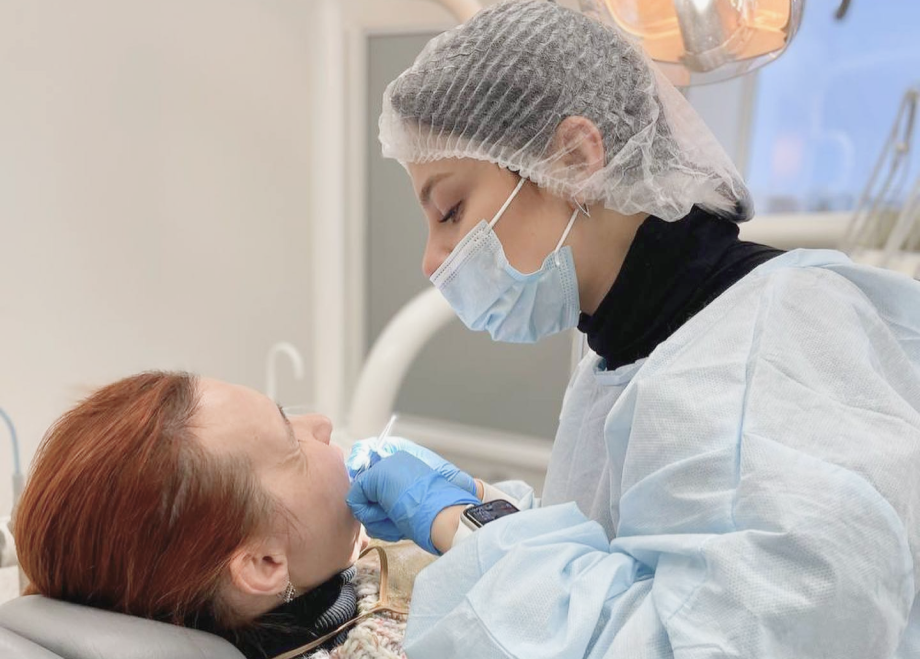
Tooth extraction is a surgical procedure that involves removing a damaged or decayed tooth from its socket in the jawbone. This procedure is usually performed by a dentist or an oral surgeon and may be necessary for various reasons, such as severe decay, infection, trauma, crowding, or the eruption of wisdom teeth. The procedure takes place in 4 stages:
- Examination: Before the extraction, the dentist will conduct a thorough examination, which may include X-rays, to assess the position of the tooth, its condition, and the surrounding bone structure;
- Anesthesia: Local anesthesia is used to numb the area around the tooth to ensure patient comfort during the procedure. In some cases, such as for extracted wisdom teeth or complex extractions, general anesthesia may be used;
- Extraction: Using specialized instruments, the dentist or oral surgeon gently loosens the tooth in the socket and gently removes it. In some cases, a small incision in the gum tissue and/or dissection of the tooth may be necessary to facilitate removal;
- Post-extraction care: After extraction, the dentist provides instructions for aftercare, which may include recommendations for pain management, stopping bleeding, and promoting healing.
Dental implants are artificial tooth roots made of titanium or other biocompatible materials that are surgically placed in the jawbone under the gums. They serve as a stable foundation for tooth replacements such as crowns, bridges, or dentures. The procedure takes place in 4 stages:
- Assessment and planning: Before the procedure, the dentist conducts a comprehensive examination, which may include X-rays or 3D images, to assess the condition of the jawbone and surrounding structures. This helps determine the optimal placement of the implants.
Surgical placement: The implant procedure is usually performed in stages. At the initial stage, the implant is surgically placed in the jawbone under the gum tissue. Over the next few months, the bone connects to the implant through the process of osseointegration, which provides a solid foundation for the artificial teeth.
Placement of the abutment: Once osseointegration is achieved, a small connector called an abutment is attached to the implant to serve as the base for the artificial tooth.
Attachment of an artificial tooth: Once the gums have healed and the abutment is in place, the artificial tooth or teeth (crowns, bridges, or dentures) are custom-made and securely attached to the abutments.
Upper lip and tongue frenulum surgery, also known as a frenectomy, is a surgical procedure aimed at correcting an abnormally positioned or narrow frenulum, a small fold of tissue that connects the lips to the gums and the tongue to the floor of the mouth. A frenectomy procedure:
- Evaluation: The dentist or oral surgeon evaluates the frenulum and its impact on oral function and health. This may include a physical examination and review of the patient’s medical history.
- Surgical procedure: A frenectomy procedure involves surgically removing or modifying the frenulum to reduce its restrictive effects. There are two main methods of performing a frenectomy:
- Traditional frenectomy: involves making an incision to release the frenulum and then applying sutures to promote proper healing.
Laser frenectomy: A laser is used to precisely remove or modify the frenulum, often resulting in less bleeding and a faster recovery. - Postoperative care: After the procedure, proper postoperative care is necessary to promote healing and prevent complications. This may include instructions on oral hygiene, pain management, and dietary support.
A tooth extraction, also known as an apicoectomy, is a surgical procedure that involves removing the top of the tooth root and surrounding infected tissue. This procedure is usually used when root canal treatment has not helped to eliminate a tooth infection or when it is not an option. Tooth resection procedure:
- Assessment: Prior to the procedure, the dentist or endodontist will evaluate the tooth, often using x-rays or other imaging techniques, to assess the extent of the infection and determine whether tooth resection is appropriate.
- Surgical procedure: A tooth resection procedure involves accessing the top of the tooth root through a small incision in the gum tissue. Infected or damaged tissue, including the tip of the root, is removed. The end of the root is often sealed with a small filling to prevent the infection from spreading further.
- Closure and healing: After the infected tissue is removed, the gum is stitched to promote proper healing. Over time, the bone surrounding the root usually fuses together and the area becomes free of infection.
A sinus lift is a procedure that is performed to increase the amount of bone in the upper jaw in the area of the molars and premolars. This procedure is often necessary when there is insufficient bone height in the back of the upper jaw or when the sinuses are too close to the jaw for dental implants. The procedure takes place in 3 stages:
- Assessment and planning: The dentist or oral surgeon evaluates the patient’s oral health and jawbone structure, often using imaging techniques such as X-rays or CT scans to assess bone density and sinus position.
- Surgical procedure: The sinus lift procedure involves making an incision in the gum tissue at the site of tooth loss. Then the bone is exposed, and a small circular incision is made in it. The membrane lining the sinus is gently pushed upward, and a bone graft is placed in the resulting space. The bone graft can be derived from the patient’s own body (autogenous graft), a donor (allogeneic graft), or synthetic materials (alloplastic graft).
- Healing and integration: Over the following months, the bone graft material fuses with the existing bone, creating a more substantial area of bone that can support dental implants.
SURGICAL DENTISTRY
Prices
-
Removal of permanent teeth800.00 ₴
-
Extraction of a multi-rooted tooth1 000.00 ₴
-
Wisdom tooth extraction1 500.00 ₴
-
Extraction of a wisdom tooth (complex)3 000.00 ₴
-
Removal of a neoplasm in the oral cavity3 000.00 ₴
-
Removal of a periodontal tooth450.00 ₴
-
Removal of a retained tooth3 000.00 ₴
-
Removal of a semi-retained tooth2 500.00 ₴
-
Retention cyst removal1 500.00 ₴
-
Cheek fibroma removal3 000.00 ₴
-
Exostosis removal1 000.00 ₴
-
Excision of the frenulum of the lip2 500.00 ₴
-
Excision of the frenulum of the tongue3 500.00 ₴
-
Bone grafting200.00 €
-
Inpatient treatment (1 day)500.00 ₴
-
The bracket space1 000.00 ₴
-
Removal of odontomafrom 1 500.00 ₴
-
Plasmolifting600.00-1 000.00 ₴
-
Fleece1 500.00 ₴
-
Abscess dissection850.00 ₴
-
Highmorotomia surgery12 000.00 ₴
-
Hemisection900.00 ₴
-
Hood excision700.00 ₴
-
Socket curettage450.00 ₴
-
Curettage of periodontal pockets in the region of 2 teeth400.00 ₴
-
Flap operation in the region of one tooth2 000.00 ₴
-
Lipoplasty4 000.00 ₴
-
Gingival margin plasty (1 unit)400.00 ₴
-
Plastic closure of gum recession (1 tooth)2 500.00 ₴
-
Cystoectomy1 500.00 ₴
-
Transplantation and plasty of mucosa1 000.00 ₴
-
NEO DENT implant, Brazil550.00 €
-
Implant Straumann, Switzerland *700.00-750.00€
-
Surgical template120.00 €
-
Bone material (0.5 cc)3 000.00 ₴
-
Resection of the root apex3 000.00 ₴
-
Sine-lifting200.00-500.00 €
ПАРТНЕРСТВО
Straumann implants*
One of the benefits of this partnership is the free implant replacement program. This program allows our customers to have full confidence in the condition of their implants and their functionality. In the event that an implant needs to be replaced or corrected under certain circumstances, Leo-dent provides this service free of charge to the patient.

Welcome to Leo Dent
Give health to yourself and your family
We preserve family smiles – an individual approach and a full range of dental services for each member of your family.
SERVICES
Surgical dentistry
Oral surgery covers a range of procedures performed by dentists to address various oral health issues, including diagnosis, surgical treatment, and rehabilitation of conditions affecting the teeth, gums, and jaw.
Symptoms that may indicate the need to see a dental surgeon include:
- Severe or persistent toothache;
- Gum disease with symptoms such as swelling, bleeding, or persistent bad breath;
Injury to the teeth or jaw; - Wisdom teeth that have erupted, causing pain or infection;
- Malocclusion.
Tooth extraction is a surgical procedure that involves removing a damaged or decayed tooth from its socket in the jawbone. This procedure is usually performed by a dentist or an oral surgeon and may be necessary for various reasons, such as severe decay, infection, trauma, crowding, or the eruption of wisdom teeth. The procedure takes place in 4 stages:
- Examination: Before the extraction, the dentist will conduct a thorough examination, which may include X-rays, to assess the position of the tooth, its condition, and the surrounding bone structure;
- Anesthesia: Local anesthesia is used to numb the area around the tooth to ensure patient comfort during the procedure. In some cases, such as for extracted wisdom teeth or complex extractions, general anesthesia may be used;
- Extraction: Using specialized instruments, the dentist or oral surgeon gently loosens the tooth in the socket and gently removes it. In some cases, a small incision in the gum tissue and/or dissection of the tooth may be necessary to facilitate removal;
- Post-extraction care: After extraction, the dentist provides instructions for aftercare, which may include recommendations for pain management, stopping bleeding, and promoting healing.
Dental implants are artificial tooth roots made of titanium or other biocompatible materials that are surgically placed in the jawbone under the gums. They serve as a stable foundation for tooth replacements such as crowns, bridges, or dentures. The procedure takes place in 4 stages:
- Assessment and planning: Before the procedure, the dentist conducts a comprehensive examination, which may include X-rays or 3D images, to assess the condition of the jawbone and surrounding structures. This helps determine the optimal placement of the implants.
Surgical placement: The implant procedure is usually performed in stages. At the initial stage, the implant is surgically placed in the jawbone under the gum tissue. Over the next few months, the bone connects to the implant through the process of osseointegration, which provides a solid foundation for the artificial teeth.
Placement of the abutment: Once osseointegration is achieved, a small connector called an abutment is attached to the implant to serve as the base for the artificial tooth.
Attachment of an artificial tooth: Once the gums have healed and the abutment is in place, the artificial tooth or teeth (crowns, bridges, or dentures) are custom-made and securely attached to the abutments.
Upper lip and tongue frenulum surgery, also known as a frenectomy, is a surgical procedure aimed at correcting an abnormally positioned or narrow frenulum, a small fold of tissue that connects the lips to the gums and the tongue to the floor of the mouth. A frenectomy procedure:
- Evaluation: The dentist or oral surgeon evaluates the frenulum and its impact on oral function and health. This may include a physical examination and review of the patient’s medical history.
- Surgical procedure: A frenectomy procedure involves surgically removing or modifying the frenulum to reduce its restrictive effects. There are two main methods of performing a frenectomy:
- Traditional frenectomy: involves making an incision to release the frenulum and then applying sutures to promote proper healing.
Laser frenectomy: A laser is used to precisely remove or modify the frenulum, often resulting in less bleeding and a faster recovery. - Postoperative care: After the procedure, proper postoperative care is necessary to promote healing and prevent complications. This may include instructions on oral hygiene, pain management, and dietary support.
A tooth extraction, also known as an apicoectomy, is a surgical procedure that involves removing the top of the tooth root and surrounding infected tissue. This procedure is usually used when root canal treatment has not helped to eliminate a tooth infection or when it is not an option. Tooth resection procedure:
- Assessment: Prior to the procedure, the dentist or endodontist will evaluate the tooth, often using x-rays or other imaging techniques, to assess the extent of the infection and determine whether tooth resection is appropriate.
- Surgical procedure: A tooth resection procedure involves accessing the top of the tooth root through a small incision in the gum tissue. Infected or damaged tissue, including the tip of the root, is removed. The end of the root is often sealed with a small filling to prevent the infection from spreading further.
- Closure and healing: After the infected tissue is removed, the gum is stitched to promote proper healing. Over time, the bone surrounding the root usually fuses together and the area becomes free of infection.
A sinus lift is a procedure that is performed to increase the amount of bone in the upper jaw in the area of the molars and premolars. This procedure is often necessary when there is insufficient bone height in the back of the upper jaw or when the sinuses are too close to the jaw for dental implants. The procedure takes place in 3 stages:
- Assessment and planning: The dentist or oral surgeon evaluates the patient’s oral health and jawbone structure, often using imaging techniques such as X-rays or CT scans to assess bone density and sinus position.
- Surgical procedure: The sinus lift procedure involves making an incision in the gum tissue at the site of tooth loss. Then the bone is exposed, and a small circular incision is made in it. The membrane lining the sinus is gently pushed upward, and a bone graft is placed in the resulting space. The bone graft can be derived from the patient’s own body (autogenous graft), a donor (allogeneic graft), or synthetic materials (alloplastic graft).
- Healing and integration: Over the following months, the bone graft material fuses with the existing bone, creating a more substantial area of bone that can support dental implants.
SURGICAL DENTISTRY
Prices
-
Removal of permanent teeth800.00 ₴
-
Extraction of a multi-rooted tooth1 000.00 ₴
-
Wisdom tooth extraction1 500.00 ₴
-
Extraction of a wisdom tooth (complex)3 000.00 ₴
-
Removal of a neoplasm in the oral cavity3 000.00 ₴
-
Removal of a periodontal tooth450.00 ₴
-
Removal of a retained tooth3 000.00 ₴
-
Removal of a semi-retained tooth2 500.00 ₴
-
Retention cyst removal1 500.00 ₴
-
Cheek fibroma removal3 000.00 ₴
-
Exostosis removal1 000.00 ₴
-
Excision of the frenulum of the lip2 500.00 ₴
-
Excision of the frenulum of the tongue3 500.00 ₴
-
Bone grafting200.00 €
-
Inpatient treatment (1 day)500.00 ₴
-
The bracket space1 000.00 ₴
-
Removal of odontomafrom 1 500.00 ₴
-
Plasmolifting600.00-1 000.00 ₴
-
Fleece1 500.00 ₴
-
Abscess dissection850.00 ₴
-
Highmorotomia surgery12 000.00 ₴
-
Hemisection900.00 ₴
-
Hood excision700.00 ₴
-
Socket curettage450.00 ₴
-
Curettage of periodontal pockets in the region of 2 teeth400.00 ₴
-
Flap operation in the region of one tooth2 000.00 ₴
-
Lipoplasty4 000.00 ₴
-
Gingival margin plasty (1 unit)400.00 ₴
-
Plastic closure of gum recession (1 tooth)2 500.00 ₴
-
Cystoectomy1 500.00 ₴
-
Transplantation and plasty of mucosa1 000.00 ₴
-
NEO DENT implant, Brazil550.00 €
-
Implant Straumann, Switzerland *700.00-750.00€
-
Surgical template120.00 €
-
Bone material (0.5 cc)3 000.00 ₴
-
Resection of the root apex3 000.00 ₴
-
Sine-lifting500.00 €
PARTNERSHIP
Straumann implants*
One of the benefits of this partnership is the free implant replacement program. This program allows our customers to have full confidence in the condition of their implants and their functionality. In the event that an implant needs to be replaced or corrected under certain circumstances, Leo-dent provides this service free of charge to the patient.
Welcome to Leo Dent
Give health to yourself and your family
We preserve family smiles – an individual approach and a full range of dental services for each member of your family.
SERVICES
Surgical dentistry
Oral surgery covers a range of procedures performed by dentists to address various oral health issues, including diagnosis, surgical treatment, and rehabilitation of conditions affecting the teeth, gums, and jaw.
Symptoms that may indicate the need to see a dental surgeon include:
- Severe or persistent toothache;
- Gum disease with symptoms such as swelling, bleeding, or persistent bad breath;
Injury to the teeth or jaw; - Wisdom teeth that have erupted, causing pain or infection;
- Malocclusion.
Tooth extraction is a surgical procedure that involves removing a damaged or decayed tooth from its socket in the jawbone. This procedure is usually performed by a dentist or an oral surgeon and may be necessary for various reasons, such as severe decay, infection, trauma, crowding, or the eruption of wisdom teeth. The procedure takes place in 4 stages:
- Examination: Before the extraction, the dentist will conduct a thorough examination, which may include X-rays, to assess the position of the tooth, its condition, and the surrounding bone structure;
- Anesthesia: Local anesthesia is used to numb the area around the tooth to ensure patient comfort during the procedure. In some cases, such as for extracted wisdom teeth or complex extractions, general anesthesia may be used;
- Extraction: Using specialized instruments, the dentist or oral surgeon gently loosens the tooth in the socket and gently removes it. In some cases, a small incision in the gum tissue and/or dissection of the tooth may be necessary to facilitate removal;
- Post-extraction care: After extraction, the dentist provides instructions for aftercare, which may include recommendations for pain management, stopping bleeding, and promoting healing.
Dental implants are artificial tooth roots made of titanium or other biocompatible materials that are surgically placed in the jawbone under the gums. They serve as a stable foundation for tooth replacements such as crowns, bridges, or dentures. The procedure takes place in 4 stages:
- Assessment and planning: Before the procedure, the dentist conducts a comprehensive examination, which may include X-rays or 3D images, to assess the condition of the jawbone and surrounding structures. This helps determine the optimal placement of the implants.
Surgical placement: The implant procedure is usually performed in stages. At the initial stage, the implant is surgically placed in the jawbone under the gum tissue. Over the next few months, the bone connects to the implant through the process of osseointegration, which provides a solid foundation for the artificial teeth.
Placement of the abutment: Once osseointegration is achieved, a small connector called an abutment is attached to the implant to serve as the base for the artificial tooth.
Attachment of an artificial tooth: Once the gums have healed and the abutment is in place, the artificial tooth or teeth (crowns, bridges, or dentures) are custom-made and securely attached to the abutments.
Upper lip and tongue frenulum surgery, also known as a frenectomy, is a surgical procedure aimed at correcting an abnormally positioned or narrow frenulum, a small fold of tissue that connects the lips to the gums and the tongue to the floor of the mouth. A frenectomy procedure:
- Evaluation: The dentist or oral surgeon evaluates the frenulum and its impact on oral function and health. This may include a physical examination and review of the patient’s medical history.
- Surgical procedure: A frenectomy procedure involves surgically removing or modifying the frenulum to reduce its restrictive effects. There are two main methods of performing a frenectomy:
- Traditional frenectomy: involves making an incision to release the frenulum and then applying sutures to promote proper healing.
Laser frenectomy: A laser is used to precisely remove or modify the frenulum, often resulting in less bleeding and a faster recovery. - Postoperative care: After the procedure, proper postoperative care is necessary to promote healing and prevent complications. This may include instructions on oral hygiene, pain management, and dietary support.
A tooth extraction, also known as an apicoectomy, is a surgical procedure that involves removing the top of the tooth root and surrounding infected tissue. This procedure is usually used when root canal treatment has not helped to eliminate a tooth infection or when it is not an option. Tooth resection procedure:
- Assessment: Prior to the procedure, the dentist or endodontist will evaluate the tooth, often using x-rays or other imaging techniques, to assess the extent of the infection and determine whether tooth resection is appropriate.
- Surgical procedure: A tooth resection procedure involves accessing the top of the tooth root through a small incision in the gum tissue. Infected or damaged tissue, including the tip of the root, is removed. The end of the root is often sealed with a small filling to prevent the infection from spreading further.
- Closure and healing: After the infected tissue is removed, the gum is stitched to promote proper healing. Over time, the bone surrounding the root usually fuses together and the area becomes free of infection.
A sinus lift is a procedure that is performed to increase the amount of bone in the upper jaw in the area of the molars and premolars. This procedure is often necessary when there is insufficient bone height in the back of the upper jaw or when the sinuses are too close to the jaw for dental implants. The procedure takes place in 3 stages:
- Assessment and planning: The dentist or oral surgeon evaluates the patient’s oral health and jawbone structure, often using imaging techniques such as X-rays or CT scans to assess bone density and sinus position.
- Surgical procedure: The sinus lift procedure involves making an incision in the gum tissue at the site of tooth loss. Then the bone is exposed, and a small circular incision is made in it. The membrane lining the sinus is gently pushed upward, and a bone graft is placed in the resulting space. The bone graft can be derived from the patient’s own body (autogenous graft), a donor (allogeneic graft), or synthetic materials (alloplastic graft).
- Healing and integration: Over the following months, the bone graft material fuses with the existing bone, creating a more substantial area of bone that can support dental implants.
SURGICAL DENTISTRY
Prices
-
Removal of permanent teeth800.00 ₴
-
Extraction of a multi-rooted tooth1 000.00 ₴
-
Wisdom tooth extraction1 500.00 ₴
-
Extraction of a wisdom tooth (complex)3 000.00 ₴
-
Removal of a neoplasm in the oral cavity3 000.00 ₴
-
Removal of a periodontal tooth450.00 ₴
-
Removal of a retained tooth3 000.00 ₴
-
Removal of a semi-retained tooth2 500.00 ₴
-
Retention cyst removal1 500.00 ₴
-
Cheek fibroma removal3 000.00 ₴
-
Exostosis removal1 000.00 ₴
-
Excision of the frenulum of the lip2 500.00 ₴
-
Excision of the frenulum of the tongue3 500.00 ₴
-
Bone grafting200.00 €
-
Inpatient treatment (1 day)500.00 ₴
-
The bracket space1 000.00 ₴
-
Removal of odontomafrom 1 500.00 ₴
-
Plasmolifting600.00-1 000.00 ₴
-
Fleece1 500.00 ₴
-
Abscess dissection850.00 ₴
-
Highmorotomia surgery12 000.00 ₴
-
Hemisection900.00 ₴
-
Hood excision700.00 ₴
-
Socket curettage450.00 ₴
-
Curettage of periodontal pockets in the region of 2 teeth400.00 ₴
-
Flap operation in the region of one tooth2 000.00 ₴
-
Lipoplasty4 000.00 ₴
-
Gingival margin plasty (1 unit)400.00 ₴
-
Plastic closure of gum recession (1 tooth)2 500.00 ₴
-
Cystoectomy1 500.00 ₴
-
Transplantation and plasty of mucosa1 000.00 ₴
-
NEO DENT implant, Brazil550.00 €
-
Implant Straumann, Switzerland *700.00-750.00€
-
Surgical template120.00 €
-
Bone material (0.5 cc)3 000.00 ₴
-
Resection of the root apex3 000.00 ₴
-
Sine-lifting500.00 €
PARTNERSHIP
Straumann implants*
One of the benefits of this partnership is the free implant replacement program. This program allows our customers to have full confidence in the condition of their implants and their functionality. In the event that an implant needs to be replaced or corrected under certain circumstances, Leo-dent provides this service free of charge to the patient.