
Welcome to Leo Dent
THERAPY
Give health to yourself and your family
We preserve family smiles – an individual approach and a full range of dental services for each member of your family.
SERVICES
Therapy
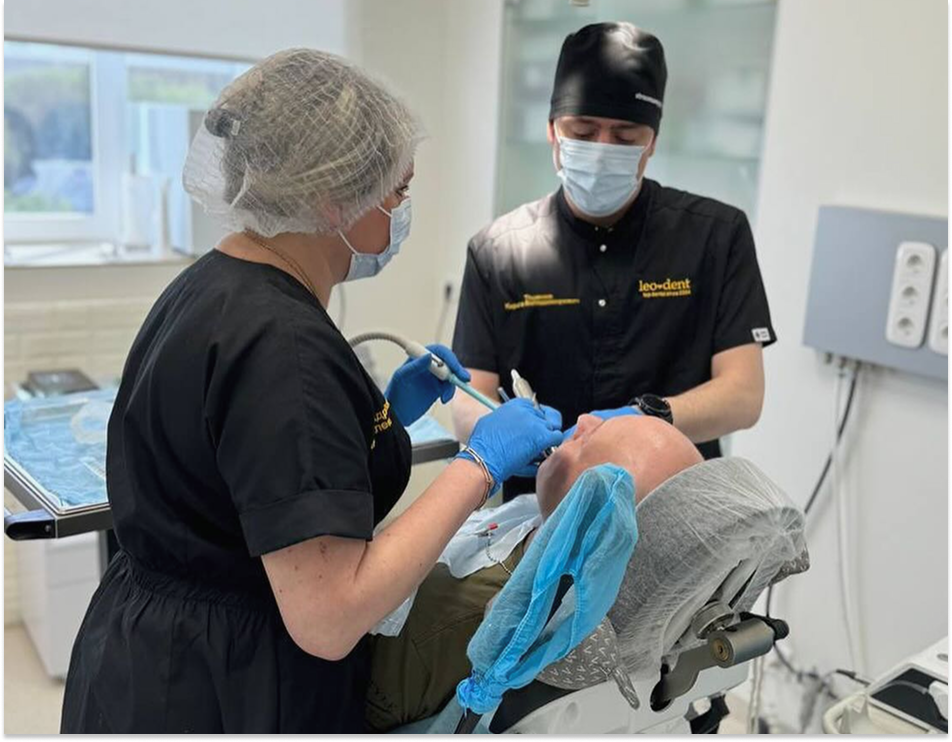
Therapeutic dentistry specializes in the treatment and prevention of diseases of the oral cavity and teeth. The main goal is to preserve the patient’s natural teeth for as long as possible by treating tooth decay, gum disease, and other diseases.
Some symptoms that may indicate the need for a consultation with a general dentist include
- Pain in the teeth or gums: If you are experiencing pain or discomfort in your teeth or gums, it may indicate the presence of tooth decay, gum disease, or other issues that require the attention of a general dentist.
- Sensitivity of teeth to heat, cold, or certain foods: This can be a sign of a variety of conditions, including root canal opening or tooth enamel loss.
- Gum evidence or bleeding: This can be a sign of gum disease or pyorrhea, a condition that requires treatment.
4. The appearance of ulcers or tumors in the oral cavity: This can be a sign of various dental diseases that require the attention of a general dentist.
5. Changes in tooth color or visible decay of tooth enamel: This may indicate tooth decay or other dental health issues that require treatment.
Sedation is a medical condition during which a patient is in a state of relaxation and reduced anxiety, but remains conscious and able to communicate. There are different levels of sedation, from light sedation (where the patient remains awake but relaxed) to general anesthesia (where the patient falls completely asleep), depending on the need and nature of the medical procedure. Although sedation is a safe process, it can have some contraindications, including allergic reactions to medications, respiratory or cardiovascular problems, pregnancy, and the use of certain medications.
Teeth whitening is a procedure used to remove stains, pigmentation, and dirt from the enamel of your teeth to improve their appearance and provide a whiter smile. This procedure can be performed in a dental clinic or at home using special whitening products.
After the teeth whitening procedure, there are some recommendations on what to avoid to ensure maximum effect from the procedure and prevent possible complications. Here are some things that are recommended to avoid after whitening:
- Colored drinks: Avoid consuming colored beverages such as coffee, tea, red wine, and sodas for the first 24-48 hours after whitening, as they can cause pigmentation of the teeth.
- Smoking: Refrain from smoking for the first 24-48 hours after whitening, as nicotine can affect the results of the procedure and contribute to tooth staining.
- Dark foods: Avoid dark foods and drinks such as soy sauce, tomato sauce, balsamic vinegar-based sauces, etc. that can affect the color of your enamel.
- Sweets: Avoid consuming very sugary foods, as they can contribute to the development of tooth decay on bleached enamel.
- Aggressive brushing: Avoid using aggressive toothbrushes or toothpastes as they can damage your whitened enamel.
Tooth decay is a dental disease in which the hard tissues of the tooth are destroyed by acids produced by the metabolism of bacteria in plaque. The process of caries begins with demineralization of the enamel and can then progress to the dentin and pulp, which can lead to serious problems. Symptoms of tooth decay can include pain when eating or consuming cold, hot, or sweet foods, sensitivity to temperature changes in the tooth, pain when chewing or putting pressure on the tooth, discomfort or pain when eating foods and drinks that have a high concentration of sugar, and the appearance of dark spots or holes on the tooth surface.
Caries treatment involves removing the affected tissue and restoring the tooth with restorative materials. Here are some of the steps in the treatment:
- Preparation: The dentist cleans the tooth from damaged tissue and disinfects the cavity.
- Filling the cavity: After cleaning, the dentist fills the tooth cavity with a restorative material such as composite resin or amalgam.
- Shaping the tooth: The dentist shapes the filled cavity to ensure the correct function and appearance of the tooth.
- Polishing: The final stage of treatment involves polishing and buffing the tooth to ensure a smooth surface and comfortable wear.
Pulpitis is an inflammation of the inner soft layer of the tooth, known as the pulp. The pulp contains nerves, blood vessels, and connective tissue. Pulpitis usually occurs as a result of deep caries, tooth trauma, or complicated treatment. Symptoms of pulpitis may include tooth pain, which may be sharp or throbbing, sensitivity to warm or cold substances, changes in tooth color, and swelling of the gums near the affected tooth. Treatment of pulpitis usually includes the following steps:
- Removal of the pulp: This can be accomplished with a root canal, a procedure in which the pulp is removed and the root canals are cleaned and filled with appropriate material.
- Antibiotics: In cases where pulpitis is caused by a bacterial infection, antibiotics may be prescribed to fight the infection.
- Tooth restoration: After root canal treatment, the tooth may need to be restored, for example with a crown, to strengthen it and prevent further damage.
Periodontitis is an inflammation of the tissues that surround and support the teeth, usually caused by an uncontrolled bacterial infection in the gums and bone adjacent to the tooth. Symptoms of periodontitis may include pain in or around the gums, swollen and tender gums, and bleeding gums when brushing or eating.
Treatment of periodontitis usually involves several stages. First of all, it is important to ensure that bacteria and infected tissue are removed from the gums and root canals. This can be done through a root canal procedure or surgery to clean and drain the infected gums. Once the infected areas have been cleaned and treated, antibiotics may be recommended to fight residual infection and prevent recurrence. Additional measures such as oral hygiene, professional dental cleanings, and regular dental visits can help maintain gum health and avoid further complications.
A cyst is a pathological cavity that can form around the root of a tooth. It usually forms as a reaction to inflammation or infection of the tooth root canal. A tooth cyst can also occur due to trauma, caries, or any other damage to the tooth root.
The process of treating a tooth cyst usually includes the following steps:
- Diagnosis: The doctor uses an X-ray image to determine the size and type of cyst.
- Root canal treatment (endodontic treatment): If the cyst is caused by root canal inflammation, root canal treatment may be performed to remove the infection and fill the root canal cavity.
- Surgery: In severe cases, when the cyst is large or does not respond to endodontic treatment, surgery may be required to remove the cyst.
- Monitoring: After treatment, the doctor may regularly monitor the condition of the cyst with x-rays to make sure it does not grow and cause further problems.
- Rehabilitation: After successful treatment of a cyst, the tooth may need to be restored to restore its function and appearance.
After cyst removal, rehabilitation may be necessary in dentistry to restore the function and appearance of the jaw and teeth. This may include restoration of the dentition with dentures or implants, treatment of root canals that may have been affected, and surgical interventions to restore the correct jaw structure. The main goal of rehabilitation is to ensure optimal function and appearance of the oral cavity after the loss of the cyst.
THERAPY
Prices
-
Consultation450.00 ₴
-
Sedation (first hour)4500.00 ₴
-
Sedation (additional hour)4000.00 ₴
-
Sedation (additional hour and a half)5750.00 ₴
-
Tooth polishing after restoration150.00 ₴
-
Preparation100.00 ₴
-
Selective teeth grinding, elimination of traumatic occlusion150.00 ₴
-
Setting the anchor pin200.00 ₴
-
Fixation of a decorative decoration500.00 ₴
-
Optragate insulation100.00 ₴
-
Cofferdam insulation200.00 ₴
-
Filling in the treatment of pulpitis450.00 ₴
-
Treatment of pulpitis with a microscope600.00 ₴
-
Unsealing of crowns in the treatment of periodontitis450.00 ₴
-
Placement of a photopolymer sealfrom 900.00 ₴
-
Restoration with photopolymer materialfrom 2 150.00 ₴
-
Treatment of pulpitis with restoration with a fillingfrom 2 500.00 ₴
-
Teeth whitening3 600.00 ₴
-
Teeth whitening on the upper and lower jaw6 000.00 ₴
-
Microprosthetics: restoration of a missing tooth (photopolymer material + splinting tape) Maryland bridge3 500.00 ₴
-
Splinting of the 1st degree of complexity with tooth restoration (1 unit) using "Glass Span" splinting tape and "Gradia" light-curing materialfrom 2 350.00 ₴
-
Removal of a cyst1 500.00 ₴
-
Root canal filling with calcium-containing preparation under the microscope500.00 ₴
-
Root canal filling under the microscope700.00 ₴
-
Placement of a filling using a microscope1 500.00 ₴
-
Unsealing a previously treated root canal under the microscope500.00-700.00 ₴
-
Temporary filling of the root canal with a preparation containing calcium, metanex pilposentine250.00 ₴
-
Mechanical dilation of obliterated root canal (1 sd.)200.00 ₴
-
Mechanical dilation of obliterated root canal (2 sd.)250.00 ₴
-
Filling of one root canal with Pro Root (Pro Root, Trioxident) material450.00 ₴
-
Root canal filling with endometasone450.00 ₴
-
Placement of a temporary filling100.00 ₴
-
Placement of a fiberglass post300.00 ₴
-
Unsealing of one root canal200.00-300.00 ₴
Welcome to Leo Dent
Give health to yourself and your family
We preserve family smiles – an individual approach and a full range of dental services for each member of your family.
SERVICES
Therapy
Therapeutic dentistry specializes in the treatment and prevention of diseases of the oral cavity and teeth. The main goal is to preserve the patient’s natural teeth for as long as possible by treating tooth decay, gum disease, and other diseases.
Some symptoms that may indicate the need for a consultation with a general dentist include
- Pain in the teeth or gums: If you are experiencing pain or discomfort in your teeth or gums, it may indicate the presence of tooth decay, gum disease, or other issues that require the attention of a general dentist.
- Sensitivity of teeth to heat, cold, or certain foods: This can be a sign of a variety of conditions, including root canal opening or tooth enamel loss.
- Gum evidence or bleeding: This can be a sign of gum disease or pyorrhea, a condition that requires treatment.
- The appearance of ulcers or tumors in the oral cavity: This can be a sign of various dental diseases that require the attention of a general dentist.
- Changes in tooth color or visible decay of tooth enamel: This may indicate tooth decay or other dental health issues that require treatment.
Sedation is a medical condition during which a patient is in a state of relaxation and reduced anxiety, but remains conscious and able to communicate. There are different levels of sedation, from light sedation (where the patient remains awake but relaxed) to general anesthesia (where the patient falls completely asleep), depending on the need and nature of the medical procedure. Although sedation is a safe process, it can have some contraindications, including allergic reactions to medications, respiratory or cardiovascular problems, pregnancy, and the use of certain medications.
Teeth whitening is a procedure used to remove stains, pigmentation, and dirt from the enamel of your teeth to improve their appearance and provide a whiter smile. This procedure can be performed in a dental clinic or at home using special whitening products.
After the teeth whitening procedure, there are some recommendations on what to avoid to ensure maximum effect from the procedure and prevent possible complications. Here are some things that are recommended to avoid after whitening:
- Colored drinks: Avoid consuming colored beverages such as coffee, tea, red wine, and sodas for the first 24-48 hours after whitening, as they can cause pigmentation of the teeth.
- Smoking: Refrain from smoking for the first 24-48 hours after whitening, as nicotine can affect the results of the procedure and contribute to tooth staining.
- Dark foods: Avoid dark foods and drinks such as soy sauce, tomato sauce, balsamic vinegar-based sauces, etc. that can affect the color of your enamel.
- Sweets: Avoid consuming very sugary foods, as they can contribute to the development of tooth decay on bleached enamel.
- Aggressive brushing: Avoid using aggressive toothbrushes or toothpastes as they can damage your whitened enamel.
Tooth decay is a dental disease in which the hard tissues of the tooth are destroyed by acids produced by the metabolism of bacteria in plaque. The process of caries begins with demineralization of the enamel and can then progress to the dentin and pulp, which can lead to serious problems. Symptoms of tooth decay can include pain when eating or consuming cold, hot, or sweet foods, sensitivity to temperature changes in the tooth, pain when chewing or putting pressure on the tooth, discomfort or pain when eating foods and drinks that have a high concentration of sugar, and the appearance of dark spots or holes on the tooth surface.
Caries treatment involves removing the affected tissue and restoring the tooth with restorative materials. Here are some of the steps in the treatment:
- Preparation: The dentist cleans the tooth from damaged tissue and disinfects the cavity.
- Filling the cavity: After cleaning, the dentist fills the tooth cavity with a restorative material such as composite resin or amalgam.
- Shaping the tooth: The dentist shapes the filled cavity to ensure the correct function and appearance of the tooth.
- Polishing: The final stage of treatment involves polishing and buffing the tooth to ensure a smooth surface and comfortable wear.
Pulpitis is an inflammation of the inner soft layer of the tooth, known as the pulp. The pulp contains nerves, blood vessels, and connective tissue. Pulpitis usually occurs as a result of deep caries, tooth trauma, or complicated treatment. Symptoms of pulpitis may include tooth pain, which may be sharp or throbbing, sensitivity to warm or cold substances, changes in tooth color, and swelling of the gums near the affected tooth. Treatment of pulpitis usually includes the following steps:
- Removal of the pulp: This can be accomplished with a root canal, a procedure in which the pulp is removed and the root canals are cleaned and filled with appropriate material.
- Antibiotics: In cases where pulpitis is caused by a bacterial infection, antibiotics may be prescribed to fight the infection.
- Tooth restoration: After root canal treatment, the tooth may need to be restored, for example with a crown, to strengthen it and prevent further damage.
Periodontitis is an inflammation of the tissues that surround and support the teeth, usually caused by an uncontrolled bacterial infection in the gums and bone adjacent to the tooth. Symptoms of periodontitis may include pain in or around the gums, swollen and tender gums, and bleeding gums when brushing or eating.
Treatment of periodontitis usually involves several stages. First of all, it is important to ensure that bacteria and infected tissue are removed from the gums and root canals. This can be done through a root canal procedure or surgery to clean and drain the infected gums. Once the infected areas have been cleaned and treated, antibiotics may be recommended to fight residual infection and prevent recurrence. Additional measures such as oral hygiene, professional dental cleanings, and regular dental visits can help maintain gum health and avoid further complications.
A cyst is a pathological cavity that can form around the root of a tooth. It usually forms as a reaction to inflammation or infection of the tooth root canal. A tooth cyst can also occur due to trauma, caries, or any other damage to the tooth root.
The process of treating a tooth cyst usually includes the following steps:
- Diagnosis: The doctor uses an X-ray image to determine the size and type of cyst.
- Root canal treatment (endodontic treatment): If the cyst is caused by root canal inflammation, root canal treatment may be performed to remove the infection and fill the root canal cavity.
- Surgery: In severe cases, when the cyst is large or does not respond to endodontic treatment, surgery may be required to remove the cyst.
- Monitoring: After treatment, the doctor may regularly monitor the condition of the cyst with x-rays to make sure it does not grow and cause further problems.
- Rehabilitation: After successful treatment of a cyst, the tooth may need to be restored to restore its function and appearance.
After cyst removal, rehabilitation may be necessary in dentistry to restore the function and appearance of the jaw and teeth. This may include restoration of the dentition with dentures or implants, treatment of root canals that may have been affected, and surgical interventions to restore the correct jaw structure. The main goal of rehabilitation is to ensure optimal function and appearance of the oral cavity after the loss of the cyst.
THERAPY
Prices
-
Consultation450.00 ₴
-
Sedation (first hour)4500.00 ₴
-
Sedation (additional hour)4000.00 ₴
-
Sedation (additional hour and a half)5750.00 ₴
-
Tooth polishing after restoration150.00 ₴
-
Preparation100.00 ₴
-
Selective teeth grinding, elimination of traumatic occlusion150.00 ₴
-
Setting the anchor pin200.00 ₴
-
Fixation of a decorative decoration500.00 ₴
-
Optragate insulation100.00 ₴
-
Cofferdam insulation200.00 ₴
-
Filling in the treatment of pulpitis450.00 ₴
-
Treatment of pulpitis with a microscope600.00 ₴
-
Unsealing of crowns in the treatment of periodontitis450.00 ₴
-
Placement of a photopolymer sealfrom 900.00 ₴
-
Restoration with photopolymer materialfrom 2 150.00 ₴
-
Treatment of pulpitis with restoration with a fillingfrom 2 500.00 ₴
-
Teeth whitening3 600.00 ₴
-
Teeth whitening on the upper and lower jaw6 000.00 ₴
-
Microprosthetics: restoration of a missing tooth (photopolymer material + splinting tape) Maryland bridge3 500.00 ₴
-
Splinting of the 1st degree of complexity with tooth restoration (1 unit) using "Glass Span" splinting tape and "Gradia" light-curing materialfrom 2 350.00 ₴
-
Removal of a cyst1 500.00 ₴
-
Root canal filling with calcium-containing preparation under the microscope500.00 ₴
-
Root canal filling under the microscope700.00 ₴
-
Placement of a filling using a microscope1 500.00 ₴
-
Unsealing a previously treated root canal under the microscope500.00-700.00 ₴
-
Temporary filling of the root canal with a preparation containing calcium, metanex pilposentine250.00 ₴
-
Mechanical dilation of obliterated root canal (1 sd.)200.00 ₴
-
Mechanical dilation of obliterated root canal (2 sd.)250.00 ₴
-
Filling of one root canal with Pro Root (Pro Root, Trioxident) material450.00 ₴
-
Root canal filling with endometasone450.00 ₴
-
Placement of a temporary filling100.00 ₴
-
Placement of a fiberglass post300.00 ₴
-
Unsealing of one root canal200.00-300.00 ₴
Welcome to Leo Dent
Give health to yourself and your family
We preserve family smiles – an individual approach and a full range of dental services for each member of your family.
SERVICES
Therapy
Therapeutic dentistry specializes in the treatment and prevention of diseases of the oral cavity and teeth. The main goal is to preserve the patient’s natural teeth for as long as possible by treating tooth decay, gum disease, and other diseases.
Some symptoms that may indicate the need for a consultation with a general dentist include
- Pain in the teeth or gums: If you are experiencing pain or discomfort in your teeth or gums, it may indicate the presence of tooth decay, gum disease, or other issues that require the attention of a general dentist.
- Sensitivity of teeth to heat, cold, or certain foods: This can be a sign of a variety of conditions, including root canal opening or tooth enamel loss.
- Gum evidence or bleeding: This can be a sign of gum disease or pyorrhea, a condition that requires treatment.
- The appearance of ulcers or tumors in the oral cavity: This can be a sign of various dental diseases that require the attention of a general dentist.
- Changes in tooth color or visible decay of tooth enamel: This may indicate tooth decay or other dental health issues that require treatment.
Sedation is a medical condition during which a patient is in a state of relaxation and reduced anxiety, but remains conscious and able to communicate. There are different levels of sedation, from light sedation (where the patient remains awake but relaxed) to general anesthesia (where the patient falls completely asleep), depending on the need and nature of the medical procedure. Although sedation is a safe process, it can have some contraindications, including allergic reactions to medications, respiratory or cardiovascular problems, pregnancy, and the use of certain medications.
Teeth whitening is a procedure used to remove stains, pigmentation, and dirt from the enamel of your teeth to improve their appearance and provide a whiter smile. This procedure can be performed in a dental clinic or at home using special whitening products.
After the teeth whitening procedure, there are some recommendations on what to avoid to ensure maximum effect from the procedure and prevent possible complications. Here are some things that are recommended to avoid after whitening:
- Colored drinks: Avoid consuming colored beverages such as coffee, tea, red wine, and sodas for the first 24-48 hours after whitening, as they can cause pigmentation of the teeth.
- Smoking: Refrain from smoking for the first 24-48 hours after whitening, as nicotine can affect the results of the procedure and contribute to tooth staining.
- Dark foods: Avoid dark foods and drinks such as soy sauce, tomato sauce, balsamic vinegar-based sauces, etc. that can affect the color of your enamel.
- Sweets: Avoid consuming very sugary foods, as they can contribute to the development of tooth decay on bleached enamel.
- Aggressive brushing: Avoid using aggressive toothbrushes or toothpastes as they can damage your whitened enamel.
Tooth decay is a dental disease in which the hard tissues of the tooth are destroyed by acids produced by the metabolism of bacteria in plaque. The process of caries begins with demineralization of the enamel and can then progress to the dentin and pulp, which can lead to serious problems. Symptoms of tooth decay can include pain when eating or consuming cold, hot, or sweet foods, sensitivity to temperature changes in the tooth, pain when chewing or putting pressure on the tooth, discomfort or pain when eating foods and drinks that have a high concentration of sugar, and the appearance of dark spots or holes on the tooth surface.
Caries treatment involves removing the affected tissue and restoring the tooth with restorative materials. Here are some of the steps in the treatment:
- Preparation: The dentist cleans the tooth from damaged tissue and disinfects the cavity.
- Filling the cavity: After cleaning, the dentist fills the tooth cavity with a restorative material such as composite resin or amalgam.
- Shaping the tooth: The dentist shapes the filled cavity to ensure the correct function and appearance of the tooth.
- Polishing: The final stage of treatment involves polishing and buffing the tooth to ensure a smooth surface and comfortable wear.
Pulpitis is an inflammation of the inner soft layer of the tooth, known as the pulp. The pulp contains nerves, blood vessels, and connective tissue. Pulpitis usually occurs as a result of deep caries, tooth trauma, or complicated treatment. Symptoms of pulpitis may include tooth pain, which may be sharp or throbbing, sensitivity to warm or cold substances, changes in tooth color, and swelling of the gums near the affected tooth. Treatment of pulpitis usually includes the following steps:
- Removal of the pulp: This can be accomplished with a root canal, a procedure in which the pulp is removed and the root canals are cleaned and filled with appropriate material.
- Antibiotics: In cases where pulpitis is caused by a bacterial infection, antibiotics may be prescribed to fight the infection.
- Tooth restoration: After root canal treatment, the tooth may need to be restored, for example with a crown, to strengthen it and prevent further damage.
Periodontitis is an inflammation of the tissues that surround and support the teeth, usually caused by an uncontrolled bacterial infection in the gums and bone adjacent to the tooth. Symptoms of periodontitis may include pain in or around the gums, swollen and tender gums, and bleeding gums when brushing or eating.
Treatment of periodontitis usually involves several stages. First of all, it is important to ensure that bacteria and infected tissue are removed from the gums and root canals. This can be done through a root canal procedure or surgery to clean and drain the infected gums. Once the infected areas have been cleaned and treated, antibiotics may be recommended to fight residual infection and prevent recurrence. Additional measures such as oral hygiene, professional dental cleanings, and regular dental visits can help maintain gum health and avoid further complications.
A cyst is a pathological cavity that can form around the root of a tooth. It usually forms as a reaction to inflammation or infection of the tooth root canal. A tooth cyst can also occur due to trauma, caries, or any other damage to the tooth root.
The process of treating a tooth cyst usually includes the following steps:
- Diagnosis: The doctor uses an X-ray image to determine the size and type of cyst.
- Root canal treatment (endodontic treatment): If the cyst is caused by root canal inflammation, root canal treatment may be performed to remove the infection and fill the root canal cavity.
- Surgery: In severe cases, when the cyst is large or does not respond to endodontic treatment, surgery may be required to remove the cyst.
- Monitoring: After treatment, the doctor may regularly monitor the condition of the cyst with x-rays to make sure it does not grow and cause further problems.
- Rehabilitation: After successful treatment of a cyst, the tooth may need to be restored to restore its function and appearance.
After cyst removal, rehabilitation may be necessary in dentistry to restore the function and appearance of the jaw and teeth. This may include restoration of the dentition with dentures or implants, treatment of root canals that may have been affected, and surgical interventions to restore the correct jaw structure. The main goal of rehabilitation is to ensure optimal function and appearance of the oral cavity after the loss of the cyst.
THERAPY
Prices
-
Consultation450.00 ₴
-
Sedation (first hour)4500.00 ₴
-
Sedation (additional hour)4000.00 ₴
-
Sedation (additional hour and a half)5750.00 ₴
-
Tooth polishing after restoration150.00 ₴
-
Preparation100.00 ₴
-
Selective teeth grinding, elimination of traumatic occlusion150.00 ₴
-
Setting the anchor pin200.00 ₴
-
Fixation of a decorative decoration500.00 ₴
-
Optragate insulation100.00 ₴
-
Cofferdam insulation200.00 ₴
-
Filling in the treatment of pulpitis450.00 ₴
-
Treatment of pulpitis with a microscope600.00 ₴
-
Unsealing of crowns in the treatment of periodontitis450.00 ₴
-
Placement of a photopolymer sealfrom 900.00 ₴
-
Restoration with photopolymer materialfrom 2 150.00 ₴
-
Treatment of pulpitis with restoration with a fillingfrom 2 500.00 ₴
-
Teeth whitening3 600.00 ₴
-
Teeth whitening on the upper and lower jaw6 000.00 ₴
-
Microprosthetics: restoration of a missing tooth (photopolymer material + splinting tape) Maryland bridge3 500.00 ₴
-
Splinting of the 1st degree of complexity with tooth restoration (1 unit) using "Glass Span" splinting tape and "Gradia" light-curing materialfrom 2 350.00 ₴
-
Removal of a cyst1 500.00 ₴
-
Root canal filling with calcium-containing preparation under the microscope500.00 ₴
-
Root canal filling under the microscope700.00 ₴
-
Placement of a filling using a microscope1 500.00 ₴
-
Unsealing a previously treated root canal under the microscope500.00-700.00 ₴
-
Temporary filling of the root canal with a preparation containing calcium, metanex pilposentine250.00 ₴
-
Mechanical dilation of obliterated root canal (1 sd.)200.00 ₴
-
Mechanical dilation of obliterated root canal (2 sd.)250.00 ₴
-
Filling of one root canal with Pro Root (Pro Root, Trioxident) material450.00 ₴
-
Root canal filling with endometasone450.00 ₴
-
Placement of a temporary filling100.00 ₴
-
Placement of a fiberglass post300.00 ₴
-
Unsealing of one root canal200.00-300.00 ₴